




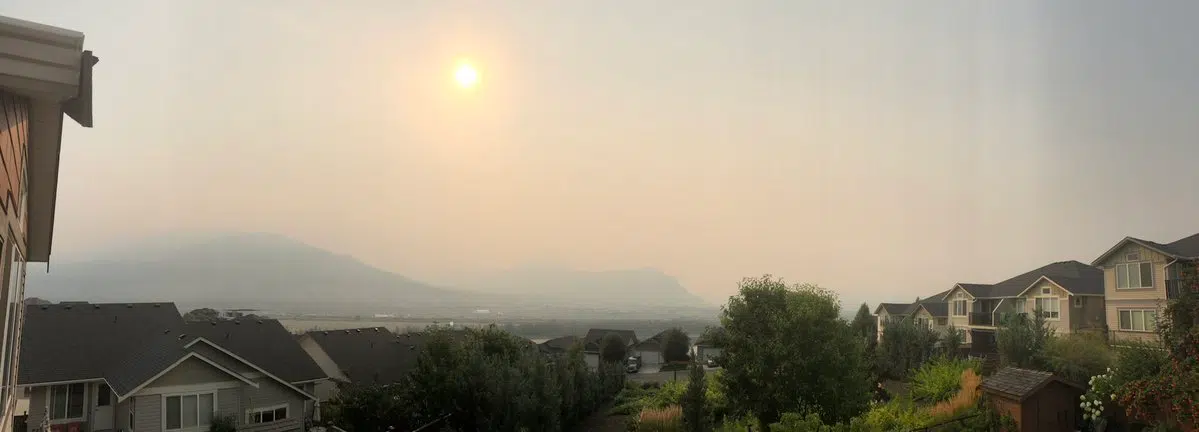
Health officials say the stresses of wildfire season can affect everyone, even if you are not directly impacted by a wildfire.
Evacuations are a big contributor to stress levels, but even the thought of smoky skies can leave some people feeling anxious.
Jana Abetkoff, a director with the Mental Health and Substance Use Services with Interior Health says it’s important to check in on older people and children as well as people with mental health challenges or few social supports.
“Some of those symptoms might include things like trouble sleeping and eating, either too much or too little,” she said. “Feeling depressed or hopeless, a lot of anxiety and fear and may even experience recurring thoughts or nightmares about an event occurring or avoiding certain activities or places that are reminders of an event that they have experienced in the past.”
Abetkoff says that no one can predict when or where a big wildfire will occur, and so the best approach is thinking ahead about how to stay mentally healthy this summer. That includes gaving an emergency plan and kit which will allow you to focus on other needs.
“It’s important to do some of the basic things such as making sure that you eat well and get enough sleep,” noted Abetkoff.
“Try and be kind to yourself. Try and follow a daily routine and do your best to try and take a break from disaster news coverage, including social media and even thinking and talking about disaster events. It is just important to take a bit of a mental break where you can.”
Interior Health notes there are confidential support and crisis lines available 24/7 for people who need it:
- KUU-US (Nuu-chah-nulth) Indigenous Line at 1-800-558-8717
- Interior BC Crisis Line at 1-888-353-2273
- Provincial Crisis Line 1-800-SUICIDE (784-2433)