




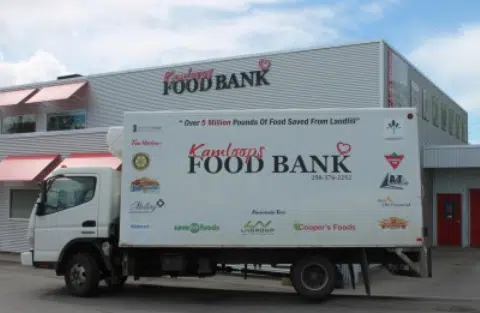
Kamloops has not been immune to an increase in food bank usage across Canada, as numbers appear to be on the rise locally as well.
The national report on food bank usage in Canada was released this week and it shows a dramatic increase in the number if single people accessing them. In BC, over half of the more than 80,000 individuals who use food banks on a monthly basis are single. Executive Director of BC Food Banks Laura Lansink says there are a number of factors that could play into that. “First thing that comes up is affordable housing and we see this in the news all the time now is a lack of affordable housing. And when you see these people, many of them are working some more than one job, but when those jobs are only paying a minimum wage or they’re on some sort of a disability income, that money simply doesn’t make it to the end of the month to buy groceries.” Nationally over 48 per cent of those accessing food banks are single which is up from 38 per cent in 2010.
Kamloops Food Bank Executive Director Bernadette Siracki says it is seeing increases across the board. “There is going to be a slight increase in each demographic that we serve. So what we’re noting for certian and what we’ve noticed an increase in since 2015 is the number of seniors that access our service. That is increasing quite dramatically.” One demographic that it a bigger rise in is seniors. Siracki says it’s created a separate time for seniors to access their services because the demand from them continues to rise. “They are on a fixed income and things aren’t going to be changing for them. So we wanted to make it easy for them. But, we do hear their concerns when they’re coming in. Affordable housing, the price of food. When it increases it desperately affects them. They are living penny to penny.”
Lansink says about one third of food bank users are children. “One out of every three of those 80,000 is a child. When you think about children having to go to a food bank, that’s the time that their bodies are growing and we need nutrition, we need to make sure that these kids are never at risk of hunger. They don’t do well in school, they don’t do well generally if they’re hungry. That’s why our food banks are here.” Siracki says those same stats translate here locally as well.
Siracki says it is disappointing to see the lineup are out the door on a daily basis. “We’re noting informally, and it will be interesting to see how the numbers unfold, it is much busier downstairs in our client waiting and intake area than it has been. Sort of the last half of this year is much busier. So it will be interesting how it unfolds.” Lansink says it’s disturbing that so many need to use food banks on a monthly basis in a province that is as rich as BC. “People are hungry. It is a very hidden issue. These people are our neighbours, they’re our coworkers, they’re the families that our own children go to school with. It is a sad state of affairs and it’s very disturbing.”
You can read the full Hunger Count 2019 report here.
Kamloops Food Bank Stats National Food Bank Stats