



As construction officially begins in Alberta, the CEO of the Trans Mountain Corporation says today is an important milestone in the pipeline’s construction.
While the company won’t be able to lay pipe in areas of B.C. where a detailed route has not yet been approved, Ian Anderson says work has already resumed at some of the pipeline’s terminals in both Alberta and BC.
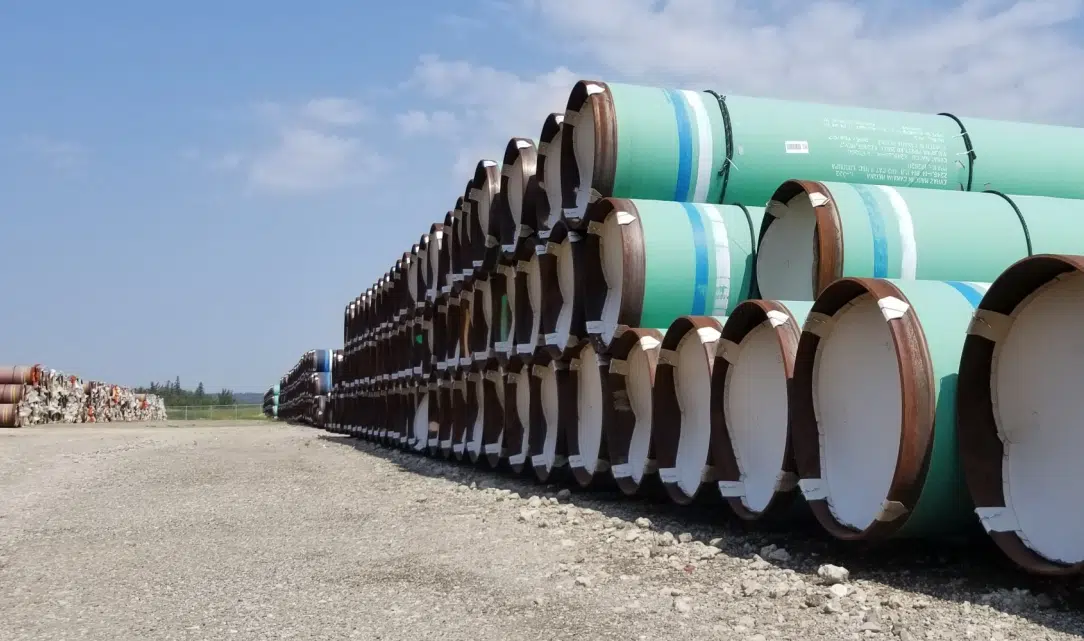
“You can see pipe on the ground and within days, maybe a couple of weeks, that pipe will be in the ground,” he said. “It will be in the ground before Christmas. We are progressing steadily on all of the permitting and regulatory aspects of this project.”
The pipeline expansion was stalled last year after a court ruling required more consultation with First Nations and a study of the project’s marine impacts. Trans Mountain says it has more than half of the pipe needed for construction, which is stored in numerous yards along the route, including in the Kamloops area.
Anderson expects that construction could take between 30 and 35 months to complete, and he says work should start up in B.C. next spring.
He says the current project is not the same one that was envisioned a few years ago.
“We’ve learned a tremendous amount over the course of the last couple of years. There are local interests, there are local concerns that we needed to take care of. We needed to adapt our route,” Anderson said.
“We needed to install different kinds of pipe, so we’ve continued our work to build support to share the prosperity of this project for everyone living in this great country of ours.”
The company says so far more than 2,200 people have been hired as part of this project. As of Oct. 31, the Trans Mountain says close to six million person hours have been spent on the project.
Federal Minister of Natural Resources Seamus O’Regan said the ceremony – held just outside Edmonton – and the opening of the Canadian part of Enbridge Inc.’s Line 3 export pipeline last weekend make it a “good week” for Canada.
Anderson meanwhile says he is committed to investing in the best technology that’s available.
“My objective is singular – deliver this project safely, in a commercially viable way so that my current owner, as they’ve stated publicly many times can sell it back to business,” he noted.
“And my intention is to give them an asset that is worthy of that to get maximum value from a future acquisition.”
In August of 2018, the federal government bought the pipeline from Kinder Morgan for $4.5 billion.