




Canada’s parliament’s budget watchdog says that it’s likely the federal deficit will hit $252.1 billion this year as a result of the COVID-19 pandemic, higher still if emergency measures remain in place longer than planned.
That figure is an estimate based on the almost $146 billion in spending announced by the government to help cushion the economic blow from the pandemic, while also factoring in estimated declines in the country’s gross domestic product, and the decline in the price of oil.
“To date, budgetary measures announced by the government are intended to be temporary. Once the budgetary measures expire and the economy recovers, the federal debt-to-GDP ratio should stabilize,” sayd Yves Giroux, in a statement.
His report assumes that real GDP will contract by 12 per cent this year, which will increase the federal debt-to-GDP ratio to 48.4 per cent.
“But if some of the measures are extended or made permanent, the federal debt ratio will keep rising.”
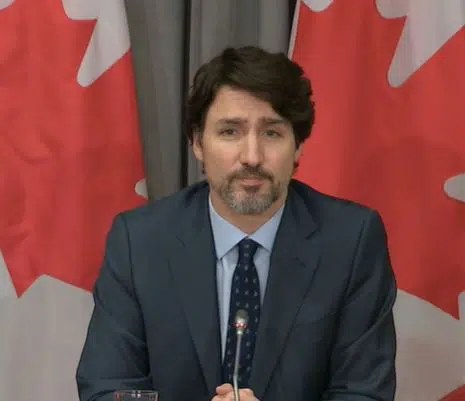
The Liberals have said that they will spend whatever is needed to help businesses and workers through the crisis. However, Prime Minister Justin Trudeau wouldn’t speculate Thursday on how the government would handle the massive deficit once the economy rebounds.
“There will be time after this is all done as we figure out how exactly this unfolds, where we will have to make next decisions on how that recovery looks,” Trudeau said. “But right now our focus is on getting through this together as a country.”
So far, more than seven million people have received federal emergency aid through the Canada Emergency Response Benefit, which has paid out more than $25.6 billion in benefits. That program has a budget of $35 billion, and Giroux estimates it will end up costing the government $35.5 billion.
He does however caution that the estimates are ‘highly sensitive’ to how the economy performs over the coming months, as well as the spread of COVID-19.
– With files from the Canadian Press