



Officials with the Department of Fisheries and Oceans (DFO) told a House of Commons committee briefing today that 98 per cent of early Stuart and 89 per cent of early Chinook were lost during last year’s early salmon run on the Fraser River.
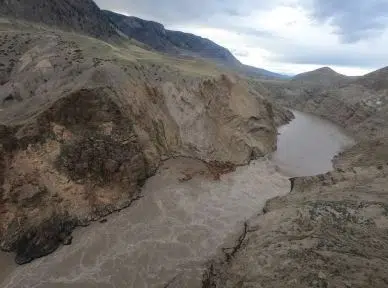
Rebecca Reid, the department’s regional director for the Pacific, says salmon survival rates improved in the summer months when work began to transport fish past the Big Bar landslide site, northwest of Kamloops, helping them get to their spawning grounds.
Federal Fisheries Minister Bernadette Jordan says about 60,000 fish were helped over the slide last year, while about 220,000 made it past on their own once water levels dropped. So far, she says there have been just two Chinook salmon that were seen arriving this year.
Jordan notes there was another small slide which occurred last month while no workers were present, which she says points to the dangerous terrain at the worksite.
“The ultimate goal would be to clear it enough so that it’s a natural passageway for the fish, so that it’s not something that we have to continually monitor or maintain,” Jordan told the committee.
“But in the meantime, we are making sure that there are measures in place to get the fish through.”
There is also concern that rising water on the Fraser River could force construction to slow down landlslide site. At that time, Department of Fisheries and Oceans director Gwil Roberts said crews are continuing to work in a challenging environment.
Data shows the cost of the federal contract to clear out the landslide site has tripled to $52.5 million – up from the original $17.6 million, when it was awarded to Peter Kiewit Sons’ on December 31.
The landslide is believed to have occurred in fall of 2018 north of Lillooet, but it wasn’t discovered until last June.
– With files from the Canadian Press