


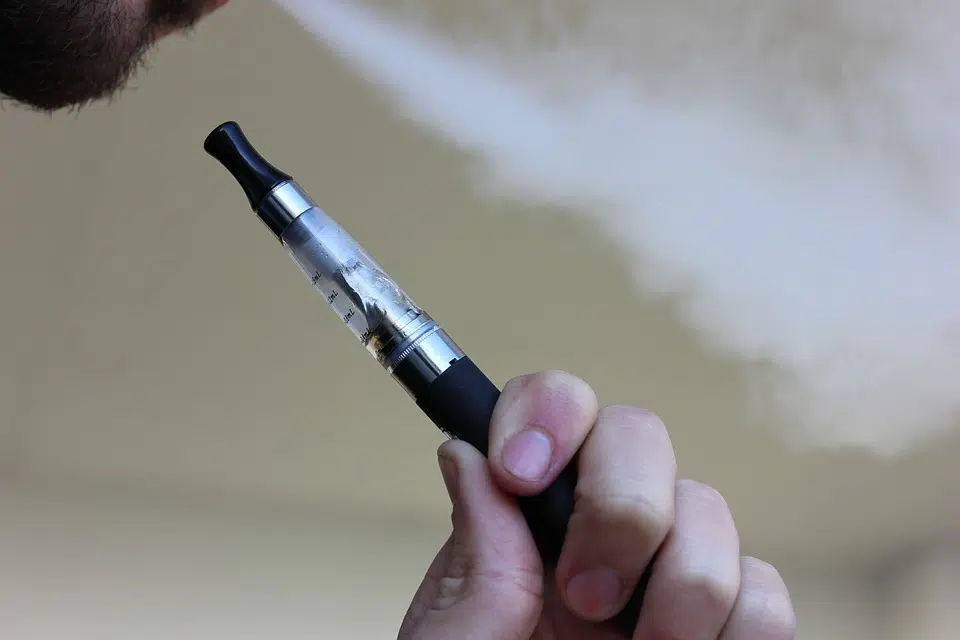
The B.C. government is bringing into force strict rules around vaping, eight months after announcing what it says was the most comprehensive plan in the country.
Health Minister Adrian Dix says the regulations restrict the content, flavour, packaging, advertising, and sale of vapour products in the province.
He says nicotine will also be treated as a health hazard under the public health act.
“Vaping is of course for some people harm reduction, and if you are a lifetime smoker, it can reduce the harm from smoking as an alternative. But if you are under 19, it is not harm reduction, it is just harm. When people are addicted to nicotine, they are at the mercy of that nicotine.”
As announced in November, the amount of nicotine in vapour pods will be restricted to 20 milligrams per millilitre, similar to a pack of 20 cigarettes, a significant reduction to the North American level, bringing B.C. more in line with regulations in the European Union.
He also says the sale of flavoured vapour products will be restricted to adult-only shops. Any new retailers will need to comply with the regulation immediately, while existing retailers have until September 15 to sell off their existing stock.
The regulations also prohibits all retailers from selling non-nicotine or nicotine-cannabis blended vapour products.
“We intended to bring these regulations in place on March 31. Through the extraordinary work of staff at the Ministry of Health, those regulations were ready, but I made the decision at that time, because as you know, we were a few days away from the peak of COVID-19, to delay the implementation of these regulations until now,” Dix said.
The province says both the ministries of Health and Education will also establish a provincial youth advisory council which will launch in September. It will develop, pilot and launch youth-informed strategies to reduce vaping by young people.
“Schools are the perfect place to talk with young people about the negative effects vaping can have on their health and development, so they have the knowledge they need to make decisions about the use of nicotine and tobacco,” said Education Minister Rob Fleming.
“That’s why we worked with students and health experts to find the best ways to reach British Columbia’s youth and their families for a campaign that will go a long way in promoting healthy choices for kids.”
Dix says other non-regulatory action under the province’s vaping action plan, includes a youth-led anti-vaping social media campaign against vaping, that was launched in February 2020. He says that campaign has so far garnered over 27 million digital impressions.
He also noted that the BC Lung Association distributed a youth vaping prevention toolkit to all K-12 schools in the province with information on making choices about vaping. For people who vape, the province is enhancing the QuitNow program to include new quit-vaping information resources for youth and provides coaching by phone or text.
The announcement also included a plan to increase the provincial sales tax rate on vaping products, which was implemented on Jan. 1.