



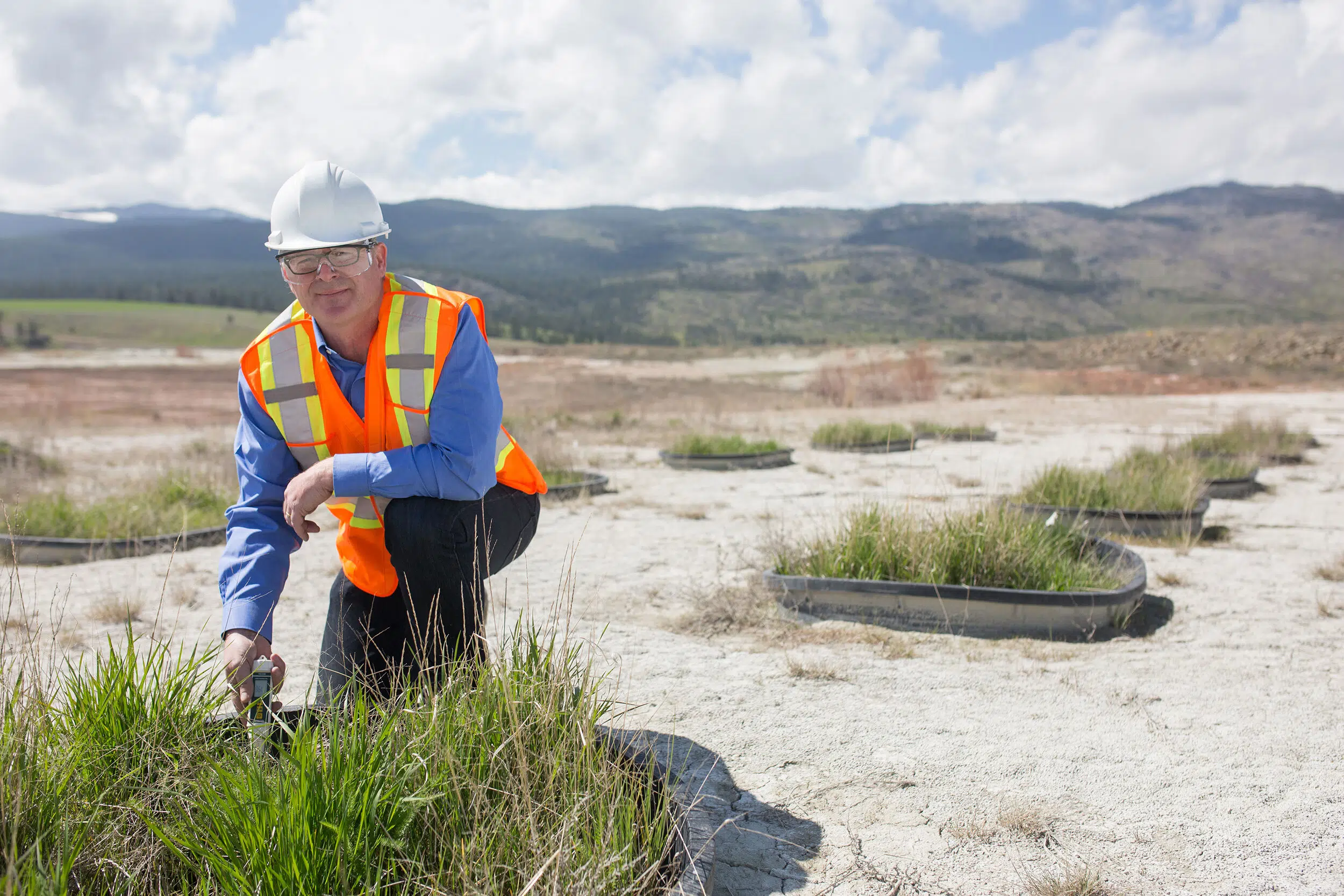
A small team of researchers at Thompson Rivers University have been given a $250,000 grant from Genome BC to continue their work using DNA to identify all of the micro-organisms in dirt.
Dr. Lauchlan Fraser says the work has applications in reclamation work in mining and other resource industries.
“It’s important in reclaiming mine sites to reintroduce soil and that living component of the soil which is the microbial community,” he said on the NL Noon Report. “Microbes – these are the living components of the soil that are critical for soil development and successful reclamation.”
He adds DNA analysis of soil could provide more accurate information when conducting future environmental assessments.
“The hiccup here is that living organisms also die and they leave behind traces of their genetic material,” Fraser said. “So when we go in to take a soil sample and extract the genetic material not only are we extracting genetic material from living organisms, but also dead organisms.”
Fraser and Jonathan van Hamme say their research focuses on how to distinguish DNA that came from living organisms versus DNA that came from dead organisms. Currently, as much as 80 per cent of the genetic material found in soil samples is typically from dead organisms, which is of no help in restoring healthy soil.
“If we don’t have a clear understanding of what we’re actually seeing that’s living and functioning at that point in time then its hard for us to make the proper conclusions,” Fraser said.
Before genomic testing was available, researchers would have to cultivate the bacteria and fungi within the soil samples to determine soil health, but this method would often only identify a small fraction of the microbes in the soil.
“This work will support one of our province’s most active economic sectors,” added Dr. Federica Di Palma, the chief scientific officer and VP Sectors at Genome BC. “Genome BC’s investment will support better tools and guidelines for environmental assessment which will be validated by industry partners.”
Fraser and van Hamme are working with the Highland Valley Copper mine, and the Copper Mountain Mine. They’ve collected soil samples and are developing testing procedures to determine proof-of-concept protocols for removing relic DNA. This spring, they will collect more samples to determine the effectiveness of those protocols.
(Photo via Genome BC)
We are thrilled to announce the funding of a new project led by @TRUResearch! They will be working to improve the way Environmental Assessments(EA) are conducted, which is a critical step in evaluating the health of reclaimed mine sites.
Learn more here: https://t.co/AAJURBFzui pic.twitter.com/ZlzIR2jbd1
— GenomeBC (@GenomeBC) December 8, 2020