




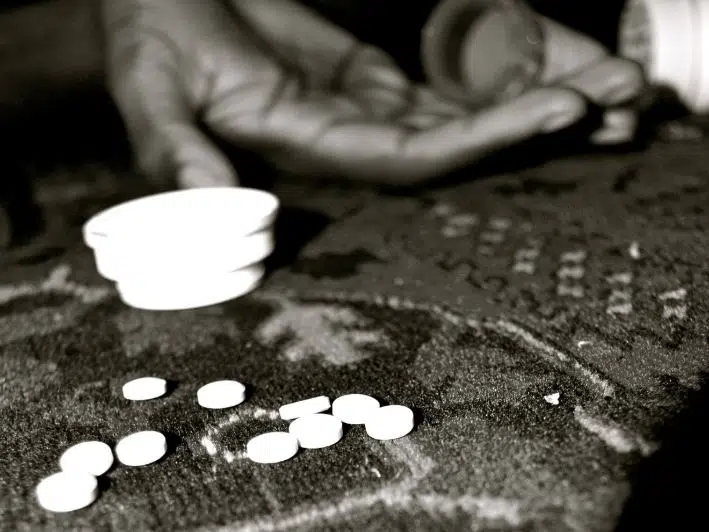
On the five-year anniversary of the overdose crisis being declared a public health emergency, the B.C. government is in the process of making a formal application to Ottawa to decriminalize personal possession of drugs.
Minister of Mental Health and Addictions Sheila Malcolmson says exemptions from Federal drug laws have been granted to B.C. in the past – notably for the establishment of safe and supervised consumption sites.
“But nobody has done this around removing the criminal penalties, so it is new work and for us to get the breadth of an application design that works for both downtown victoria and the far north of B.C. is detailed work that we’ll have to do with community leaders and people working in the field,” she told NL News.
Officials with the Ministry and Health Canada have been working on an agreement that outlines how the Province will work with Health Canada to get an exemption to the Controlled Drugs and Substances Act, which governs simple drug possession.
“As a first step to starting down that decriminalization process last year my colleague Mike Farnworth, the Solicitor General asked police forces not to dedicate resources to pursuing criminal charges for people that had personal possession of drugs – but the application of that has been uneven.,” Malcolmson said.
To date, over 7,000 people have lost their lives to an overdose in the province since the public health emergency began in 2016. In Kamloops, there have been 248 such deaths since 2011 – 219 of which have been since 2016 – including a record 60 people in 2020 alone.
Meantime the government is also boosting funding for expanded overdose prevention services with $45-million over three years. It will allow local health authorities to scale up regional overdose prevention services such as “inhalation centres”.
According to the BC Coroners Service, using drugs by inhalation has become the most common mode of consumption implicated in drug deaths.
“The COVID-19 pandemic is having devastating effects on people who use drugs – illicit substances are more toxic and people are struggling with increased isolation,” Malcolmson added. “Today, our government is committing to sustain and enhance services in every health authority to prevent overdose deaths and connect people to supports. There’s more to come as we continue building the comprehensive system of mental health and addictions care that British Columbians deserve.”
The provincial government also continues to hire new registered nurses who can prescribe addictions treatment medications.
So far, 82 registered nurses and registered psychiatric nurses have enrolled to complete their training to prescribe medications for opioid use disorder.
The funding is part of B.C.’s Budget 2021, which will be tabled next week.
B.C.’s Provincial Health Officer, Dr. Bonnie Henry, has been calling on the federal government to decriminalize the possession of small amounts of illicit drugs meant for personal use.
“British Columbia is the only province that has taken the important step to declare a public health emergency, despite this being a national crisis,” a statement from the government said.
“We are working urgently to make complex, groundbreaking changes within B.C.’s health care system to evolve how we approach and treat people living with addictions.”