



The B.C. government has given the go-ahead for road checks in a bid to enforce travel restrictions that were announced last Friday.
Public Safety Minister Mike Farnworth says the road checks will be on major highway corridors, near Hope for example, and could be set up at any time until the order is lifted at 12:01 a.m. on May 25.
“You will not see road checks in downtown Vancouver or along Boundary Road,” Farnworth said. “They will be at those high-traffic corridors. The obvious one is [Highway 1] where it goes into the Interior, to the Canyon routes, the Coquihalla and the Hope-Princeton.”
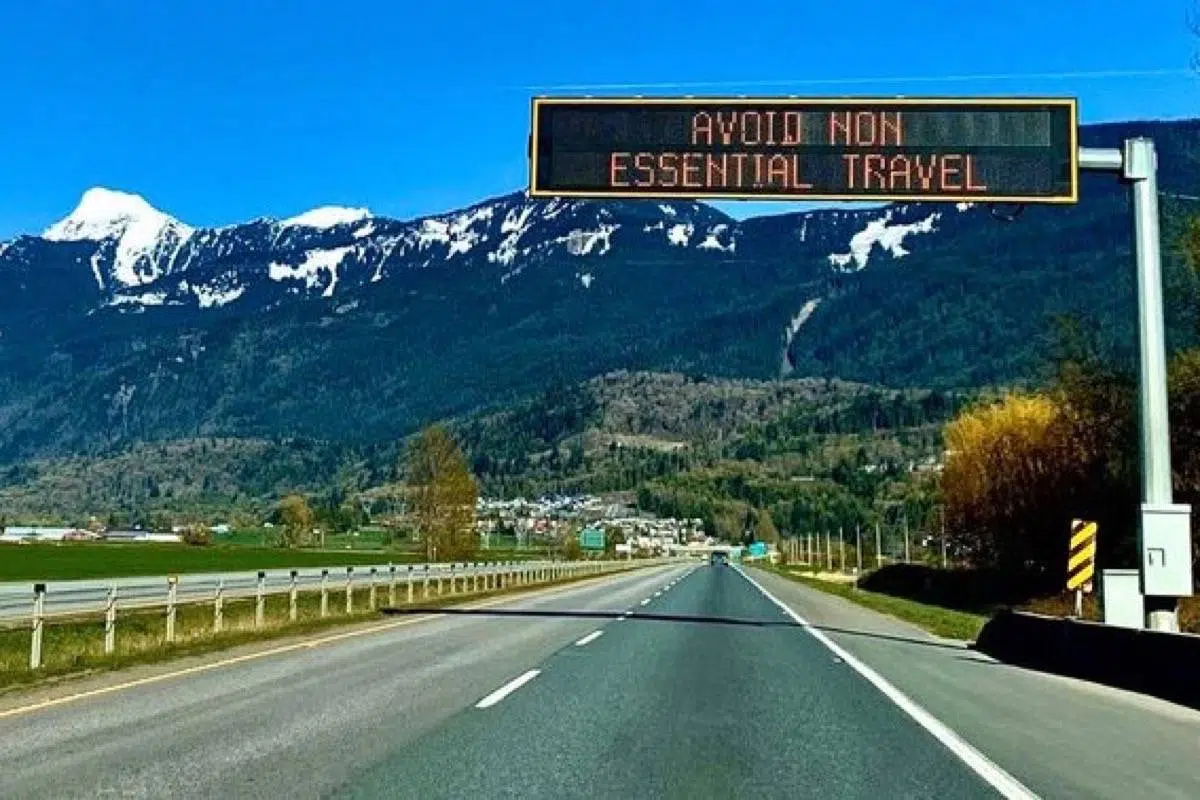
Farnworth also said drivers will be warned “several kilometres” ahead of the road check with signs.
“The intent of this order is not punishment but rather to educate around travel. Our goal will be to encourage behaviour that helps limit unnecessary travel and, as a consequence, transmission,” he said.
If you’re stopped at a road check, Farnworth says only the driver may be asked to provide a name, an address, a driver’s licence and the reason for travel. Passengers will not have to provide that information.
“The primary goal of these road checks is to educate and deter people form travelling for non essential reasons. There is no authority for pedestrians to be stopped on the streets or for arbitrary inspections or investigations to be conducted by police,” Farnworth said, responding to concerns from racialized communities that they may be targeted unfairly.
“These enforcement orders apply to the site where the road checks are taking place. Police will only record information if a driver is in violation of the order.”
The National Police Federation, which speaks for RCMP members in B.C., says an agreement has been reached with the provincial government that addresses many of its members concerns about policing the zones. Police, in a statement, say enforcement will only occur at the designated locations on Highways 1, 3, 5, and 99.
As noted by Kamloops Mayor Ken Christian yesterday, only the provincial RCMP traffic division will be able to conduct these road checks. If police have reason to believe someone has travelled for non-essential purposes, they can direct them to turn around and leave the region.
“My hope is that every British Columbian realizes the tremendous progress we can make if we stay close to home, and we can give the heroes in our health-care system a fighting chance at putting the current spike in cases behind us,” Farnworth added.
“These restrictions that we have implemented are unprecedented, yet so are the challenges we face during this pandemic. And prohibiting travel outside of your community will help to limit the spread of COVID-19.”
As announced last week, the rules allow people to travel between one of three zones if they’re going to work or school or travelling to get health care. Two new reasons for essential travel were announced today allowing people to travel if they are avoiding risk of abuse or violence, or if they’re are going to visit someone in a long-term care home or an assisted living facility.
Not following a police order to turn back could result in a $230 fine, and violating the travel order is a $575 fine.
For more information about COVID-19 travel restrictions, go here.