



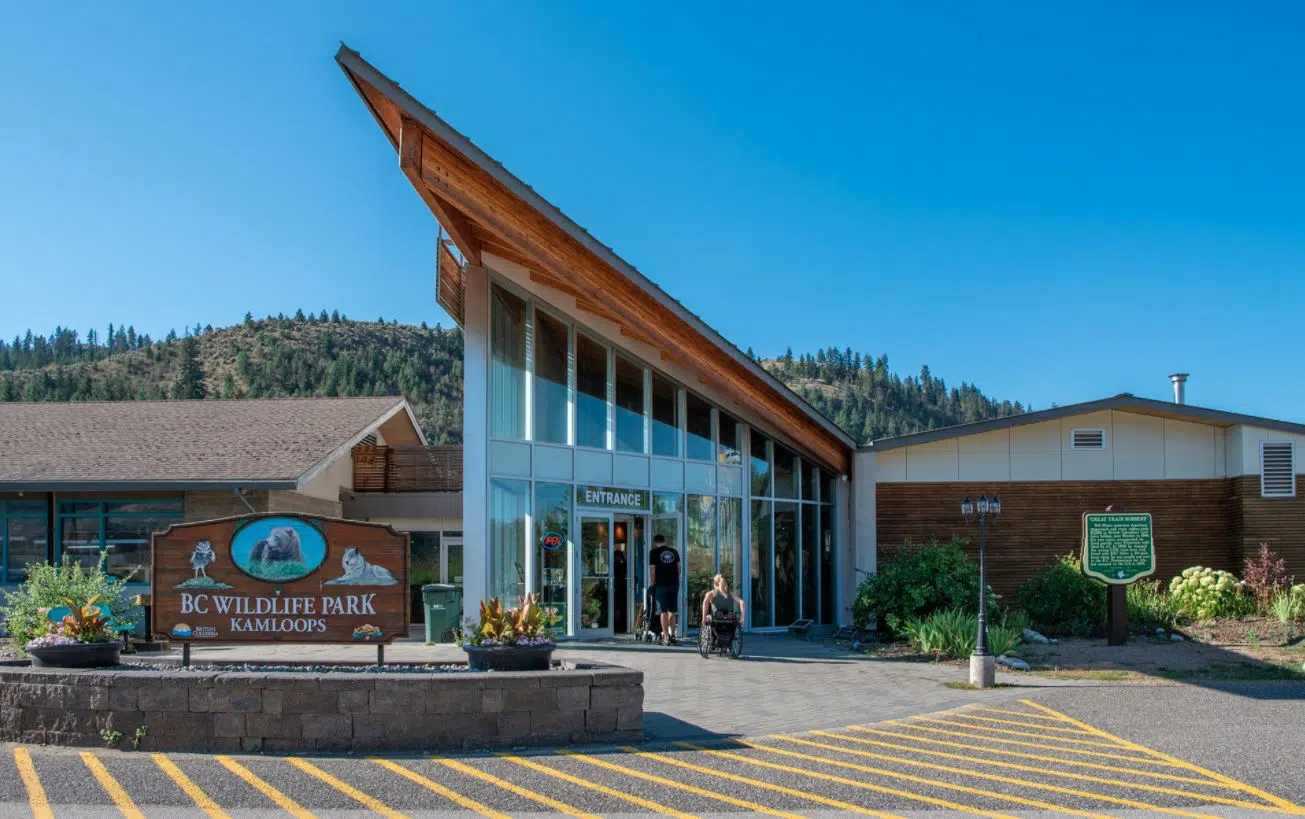
The General Manager at the BC Wildlife Park says he is disappointed to not have gotten any of the COVID relief funding that was meant for major tourism operators in the province.
Glenn Grant says their application for $500,000 was denied by the B.C. Government because the Wildlife Park did not show a 30 per cent loss in revenue.
“It is great that some money is being put aside from the provincial government now but those funds were needed eight, nine, ten months ago,” he said. “So when we were really in a position of need, the community of Kamloops stepped up but all of those donations went towards our total revenue which would then not show that we lost more than 30 per cent.”
“Self-generated revenue was down 50 per cent, but when you add all other grants that we received from the federal wage subsidy and from local donations, that was the reason why we did not receive any money from this particular program.”
He notes that was likely just one reason why the Wildlife Park’s application was denied.
“It is kind of a double edged sword because we had applied for the federal wage subsidy grant, which if we don’t get the grant, we don’t have the people working. If we don’t have the people working, we don’t open,” Grant added.
“It was great to have that wage subsidy but those funds also went towards our total revenue as far as this grant goes.”
Speaking on NL Newsday, Grant says that provincial COVID relief money would have been a huge boost to the park’s bottom line which has taken a beating because of a lack of visitors due to ongoing pandemic restrictions.
“Another thing that’s a little disappointing is that this program had $50 million available and they gave away about $36 million, so what happened to the other $14 million?” he asked.
“Is it going to be reallocated later? Is it just not going to be given away? There are still some questions that I’d like to look into or I’d like to ask and we’ll see if there’s other areas where we can get some support.”
In a statement, Carla Wormald, a spokesperson for the Ministry of Tourism, Arts, Culture, and Sport told NL News the $50 million was part of $100 million allocated in the 2021 B.C. budget, meant for tourism relief and recovery.
“The remaining $13.4 million in that fund will support in-person events, fairs and festivals, with application information rolling out in the coming weeks,” she said.
She said in order for a tourism operator to be eligible for the one-time grant, they had to be B.C. owned, had to have showed a 30 per cent loss in revenue, and they had to be an anchor attraction that met certain visitation thresholds.
In the case of the BC Wildlife Park, that would mean an attendance of at least 15,000 people a year.
“The revenue reduction calculation included total revenue from all sources less grants from municipal, provincial, and federal governments, consistent with other Provincial grant programs,” Wormald added.
In 2020, the BC Wildlife Park reported an attendance of 68,000 people, down about 50,000 from the all-time record of 119,800 visitors in 2019. That drop in visitors led to a loss of about $600,000 in revenue for the park.
“Being open daily and having our events is extremely important to the park financially because the events are what actually drives the attendance, while tourism drives the summer attendance,” Grant told NL News back in March.
“It wasn’t really a bad year, but it was definitely a different year.”
Over 50 attractions from around the province and 26 tour bus operators received grants through the Major Anchor Attractions Program. In Kamloops, Thompson Valley Charters and the Kamloops Art Gallery were the only recipients.
The Lillooet District Historical Society and the Rocky Mountaineer were also recipients though the province did not disclose how much “to maintain the confidentiality of recipients’ business information.”