




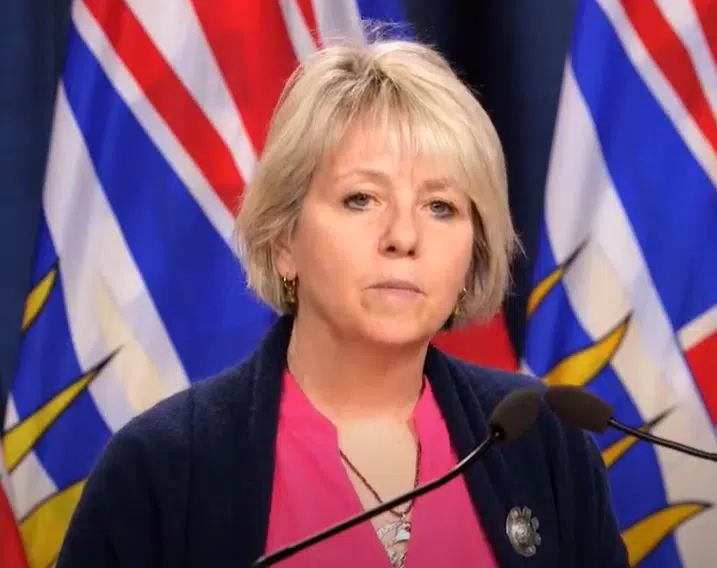
B.C.’s top doctor is encouraging people who are pregnant, planning to get pregnant, or breastfeeding to get vaccinated against COVID-19.
Dr. Bonnie Henry says 40 pregnant women who have spent time in the ICU through the pandemic, most in the past few months.
She says a majority of those women were not vaccinated, prompting her statements on Tuesday, where she urged people in those categories not yet vaccinated to do so.
“While it is true that the clinical trials did not include pregnant people, we also know a lot more about these vaccines and how safe they are and how they work in pregnant and breastfeeding people,” she said, noting real-life evidence shows vaccination prevents severe illness and hospitalization.
“Over 90,000 pregnant women have been vaccinated against COVID-19 in the United States and the study very recently came out looking at outcomes, and no major side effects have been identified, and importantly, safety data shows that pregnant people have the same mostly mild side effects as everyone else, and there were no increased risks of pregnancy complications – [miscarriage, early birth, stillbirth] – or neonatal outcomes when you’re vaccinated.”
Henry also warned of worse sickness from COVID-19 while pregnant, especially with the Delta variant, which has shown that unvaccinated pregnant women experience higher rates of stillbirth and pre-term birth, leading to their priority vaccination in many provinces.
“We’ve seen the tragic outcomes of that across the province,” Henry said.
“[The vaccine has] been recommended by the Society of Obstetrics and Gynecology Obstetricians and Gynecology here in Canada [and] by our National Advisory Committee on Immunization and by similar groups around the world.”
Henry also says she also wants to ensure health-care workers who are in their child-bearing years get vaccinated to protect themselves, their colleagues, and others who may be exposed to the virus.
“They do not affect fertility, there’s no way that they can do that, but that is one of the common lies that is out there right now,” she added.
Throughout the pandemic, in fact, Henry has been critical of trolls posting lies online.
“Particularly on social media there’s been very pointed disinformation, intentionally misleading information by certain groups of people to incite fear about the vaccines and we see that in some communities across the province,” she said.
“I can say unequivocally, these vaccines do not affect fertility in women or in boys, in young men, but that is one of the common lies that is out there right now – to create fear.”
COVID infected people should also get vaccinated: Dr. Henry says
Speaking Tuesday, Henry also urged people who have previously been infected with COVID-19 to get vaccinated.
Henry said these people will have had an “inconsistent” immune response, as she notes that protection from the disease may vary or may not be as strong as it is from a vaccine.
“Many people wonder if they need to be vaccinated and the short answer is yes … we know that the antibody levels after infection can be very varied,” Henry said.
“Some people’s immune response can be really overwhelmed by infection, even with a mild or moderate infection but particularly if you’re hospitalized, and you may not develop that long-term immunity that protects you from reinfection as well. Some people have a milder illness and they may not stimulate the whole part of their immune system.”
“We also know that some people who have recovered but have had long COVID symptoms actually find their symptoms get better after immunization,” she added.
Health Minister Adrian Dix says there are now just 13.2 per cent of people in British Columbia who are unvaccinated, a number which will include children under the age of 12 who are not yet eligible for a vaccine.
Health Canada is currently in the process of reviewing the Pfizer-BioNTech vaccine for use on children over the age of six. Those results could be expected in the coming weeks.
“I think that’s very good news. It gives us just one more tool to be able to protect younger children against this virus,” Henry said. “I think this will be really important especially as we’re into the school year.”
Henry also said Tuesday that people who are fully vaccinated no longer need to self-isolate, if they were exposed in a “low-risk setting” though they will still need to monitor for symptoms.
They will, however, still need to isolate for 14 days should any symptoms arise, or if they test positive for the virus.