




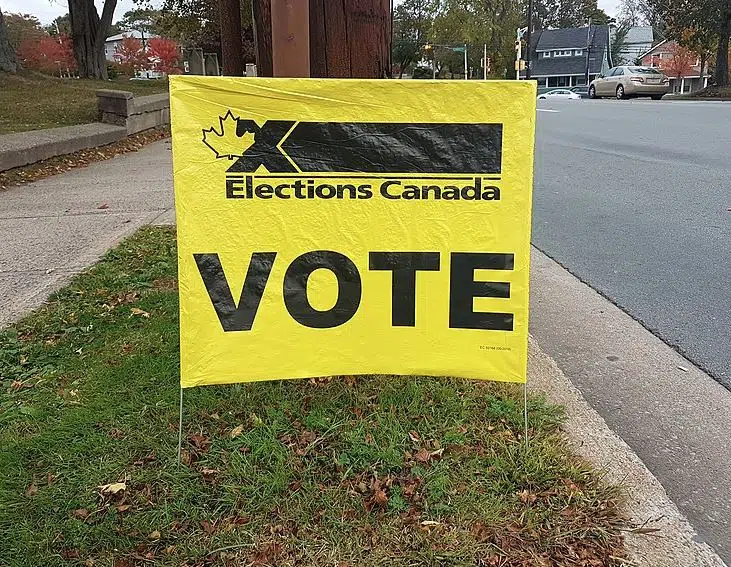
Photo via Wikimedia Commons
A pandemic election question: what can be done if you tested positive for COVID-19 after advanced voting closes but before general election day? Anyone who had that happen or was a close contact, would have been forced to isolate and asked not to attend a polling station.
Acumen Law’s Kyla Lee calls it unfair to Canadians as it is a constitutional right to participate in an election. “Saying that you had an earlier opportunity to do it is not sufficient. I expect that we’ll see a charter challenge launched by individuals who were required to isolate or who couldn’t participate in the democratic exercise as a result of the COVID-19 isolation and quarantine orders.”
Lee says the question remains: what remedy can be given to these individuals? Casting a late ballot wouldn’t provide any value and would not have any real impact on the outcome. “Financial compensation would be difficult for the courts to award. It is a possibility in a breach of a charter right, but it would essentially only be something that the courts could set as a nominal value, because the value of a vote doesn’t really have a corresponding [dollar] value.”
The issue has legs beyond a pandemic. In the past, if you came down with the cold or the flu you might take some time off to stay home and rest, but no one was stopping you from going out and living your life. However, since COVID-19 struck the world the emphases on staying home when you’re not feeling well has greatly enhanced. Doctors, politicians and many employers have hammered home the message to stay home when you’re sick so that everyone else can be protected.
Lee says that is a much different attitude than people had before the pandemic. “You went to the grocery store, you went to work, you sent your kids to school when they were sick. That is something that we all used to do because we didn’t really think about the way that we do now. And the way that our behavior in society and our attitude in society means that we are probably going to have to reevaluate how we deal with accommodation of election activities for people who, as a result of illness or unforeseen circumstances like that, are incapable of voting on election day.”