




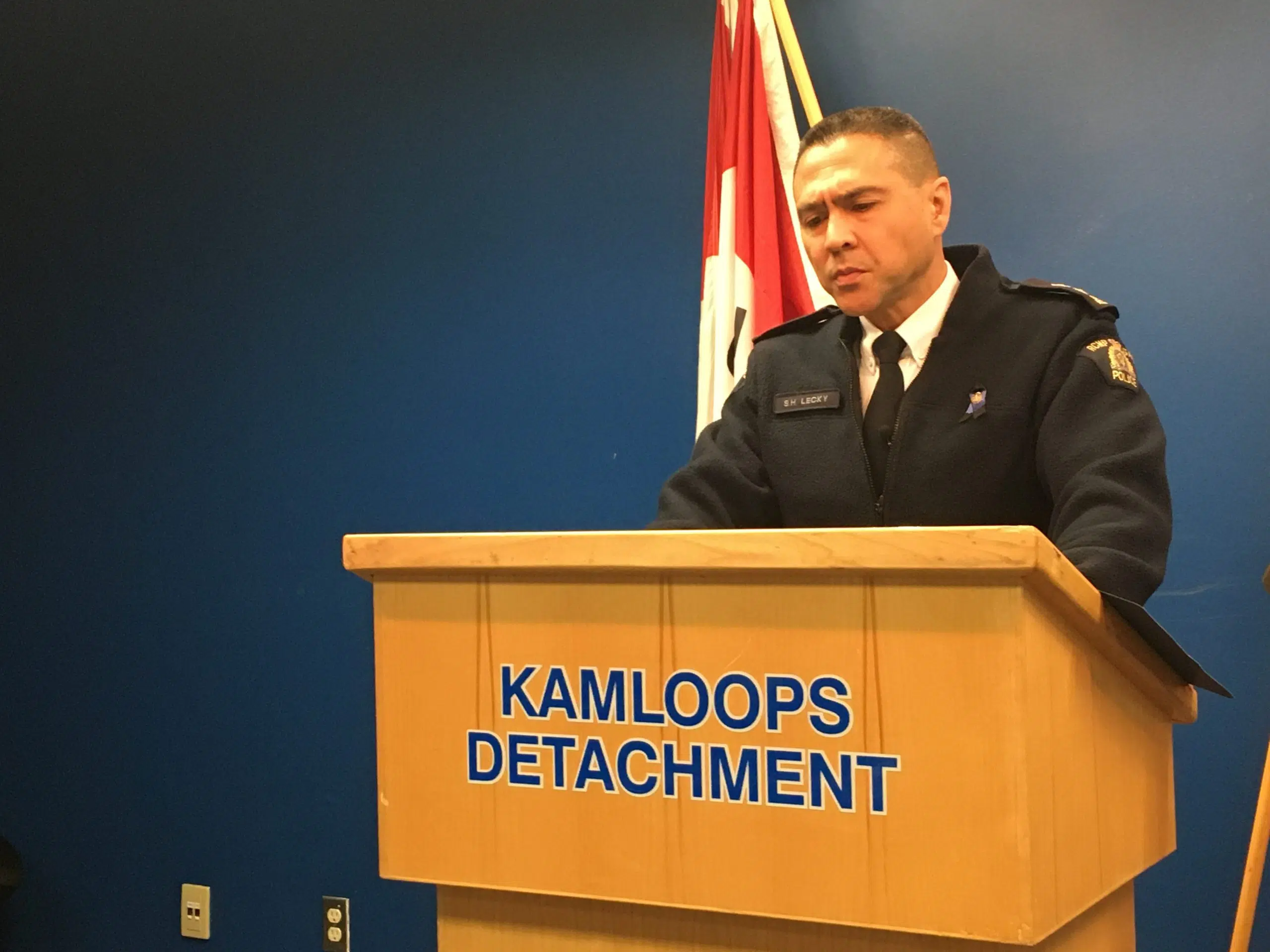
The head of Kamloops RCMP is happy to see that the province is looking for creative solutions to the prolific offender issue noting that it’s a source of frustration for everyone in the community.
Speaking on the NL Morning News Supt. Syd Lecky says the majority of crime in Kamloops is committed by a select few individuals. “I don’t want to give you a specific number except to say 5% of the offenders commit 90% of the work wouldn’t be too far off. And this is nothing new. It’s always been the case.”
Lecky says he does have concern about crimes not being reported because of a belief there won’t be any repercussions. “Everybody doesn’t need a hug and sent on their way. We do need to have consequences for actions and if we don’t that feeling of lawlessness is there and the frustration that comes with it for our public, business community and certainly our police as well. This is extremely frustrating when you’re arresting the same people over and over again and it appears that there’s no consequence.”
In addition to the frustration these select few individuals cause to business owners and the wider community, Lecky says prolific offenders take up a lot of police resources.
“You’re innocent until proven guilty, but there does come a point at which I think our tolerance level for that in the system… it has to come to an end where we say okay you have been given enough opportunities and you continue to offend or not show up for court. And if we have to arrest that same person, and I’m not exaggerating when I tell you I have a number of them that have been arrested seven or eight times for the same offences or additional offences while they are out on bail. So, that means warrants have been issued sometimes seven, eight, nine times. It’s really, really a strain on the system. And that’s not just a strain on police” said Lecky. “It’s impacting our community.”
“It ties up our court system, it ties up our crown who has to deal with multiple charge assessments, and anybody else affected in the system. So these are real issues that are impacting and costing money to the taxpayer and it is a frustration for our clients.”
Lecky made the comments in response to BC Attorney General David Eby announcing that a two member panel will investigate the issue and report back with “creative solutions” to deal with prolific offenders within 120 days.
Lecky is looking forward to seeing what ideas the investigation provides. “In the next four months when the recommendations come forward we will all be jumping with joy at the creative solutions that are proposed.”
Meanwhile, Eby was a guest on the NL Morning News on May 9, 2022. He was asked how quickly we could go from the idea phase to actually making any new tools for law enforcement available. “Well it really depends on what comes forward. So we’re working within a federal criminal law context and decisions from the Supreme Court of Canada on the criminal side. So that’s the frame we have to work in at the provincial level.”
“But that doesn’t mean that we’re limited in terms of our responses. We do have integrated courts within our province. We do have different programs in the province where there are supports, mental health supports that police can draw on in the street” said Eby. “We do have involuntary beds. We do have social workers that do this kind of work. It may be asking them to work differently. It may be targeting our crown counsel differently. It may be targeting police differently. I can’t pre-judge what the work is that they’re going to come up with, but it may be redeploying existing resources or we may need to bring new things to the table.”
Eby has tasked Doug LePard, a former Vancouver Police Department deputy chief and former Metro Vancouver Transit police chief; and Amanda Butler, a health researcher and criminologist to go out on the front lines and identify what’s not working in the programs we have or what is working in certain communities. Eby says “this is not a universal issue.”