




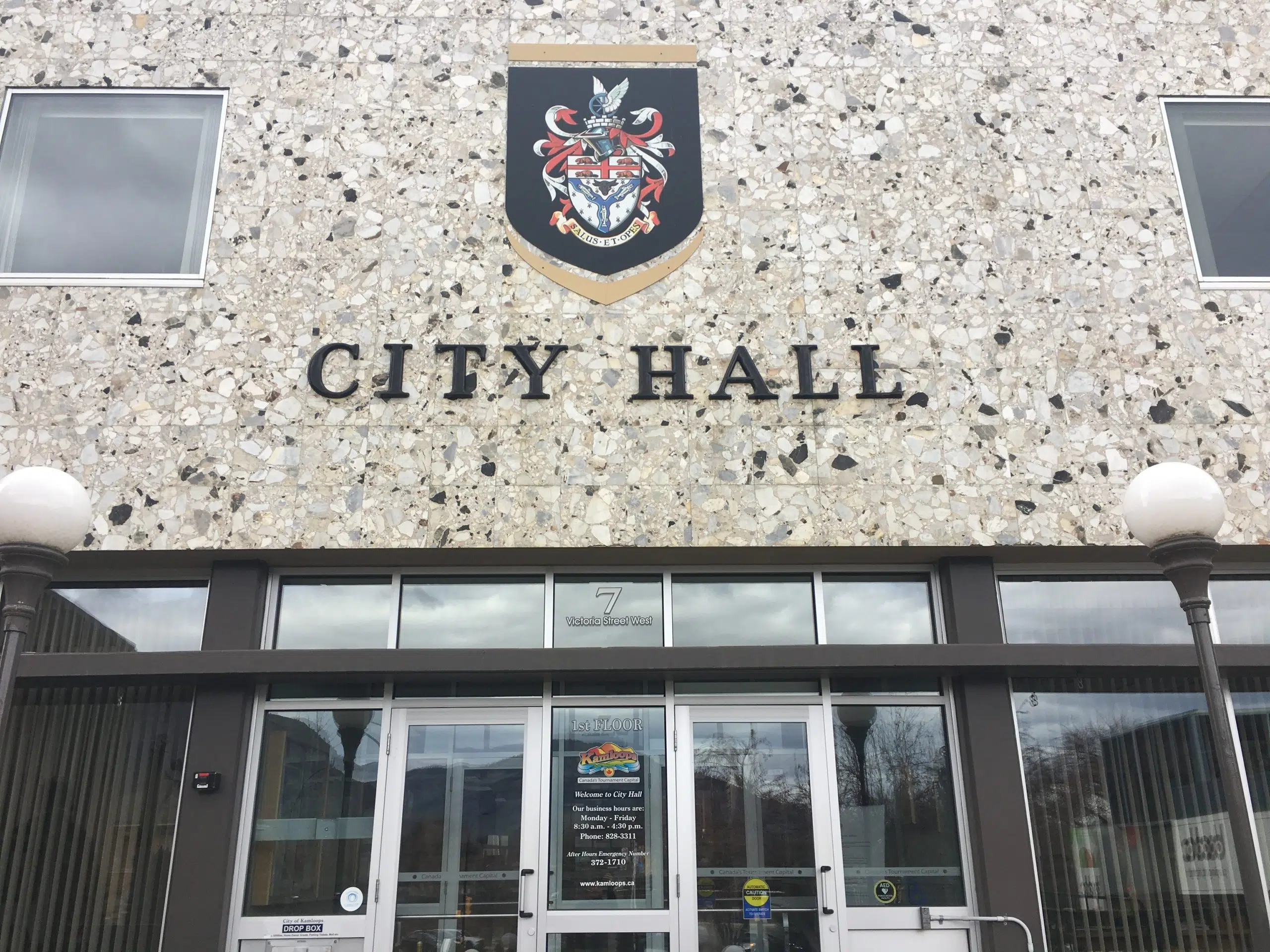
Kamloops City staff say it could take about six weeks to get a bylaw to improve radio communications inside new or renovated high-rise buildings through the system.
The City’s Community Services Committee approved the ask from Kamloops Fire and Rescue Deputy Chief, Ryan Cail, during Thursday’s meeting.
Using the RIH Patient Care Tower as an example, Cail said modern construction techniques to increase energy-efficiency are making it difficult for first responders to effectively communicate while on a call.
“If we are there in an emergent situation we don’t have any communications so we are forced to be creative with somebody outside, somebody in the foyer, somebody on the floor or we try to use cellphones if we can,” he said.
In his report to the Committee, Cail also wrote that communications are further complicated by limitations in the current radio infrastructure, Kamloops’ ‘challenging’ topography, and increased signal loss as these taller structures block the signal paths.
This bylaw would apply to all new high-rises or as part of renovations to existing buildings in Kamloops.
“We do have challenges in other buildings but a lot of those buildings are of the older construction,” Cail said. “The biggest push going forward is the newer construction. Everybody knows we got the [City Gardens towers] coming downtown pretty soon so we’re hoping we can get ahead of that.”
The idea is to improve communication by using bidirectional amplifiers, which cost between $4,000 and $25,000, donor antennas which are pointed at the nearest radio tower site, and a distributed antenna system, which taps the signal from the amplifier to areas where signal transmission is impaired.
Tom Calne, the incoming president of the Canadian Homebuilders Association Central Interior, told NL News he wants to City to do its due diligence before potentially adding more costs on the construction sector.
“My understanding is these problems have come to the forefront after the inspections at the RIH tower [which] is packed with medical equipment which for all we know, could be blocking the communication,” Calne said. “So we think it would be really disappointing to have these costs thrust upon our industry if our buildings aren’t even creating a problem.”
“If the only solution is the bylaw, then our members will follow [it] because safety is more important than anything. But we just want to make sure the City of Kamloops exhausts all options before placing this additional cost on our industry.”
Speaking during Thursday’s committee meeting, Cail said this is not a new thing as many other municipalities have similar bylaws in place.
“We by no means are dictating how this is going to be done. We are encouraging everybody to be at the table and work together to create something that is within their means that they can use within their building construction,” he said.
“We just want at the end of the day to be able to walk through a building and sign off on a piece of paper saying ‘this is excellent. Communications are great.'”