



There were seven more toxic drug deaths in Kamloops in May this year, according to new preliminary data from the BC Coroners Service.
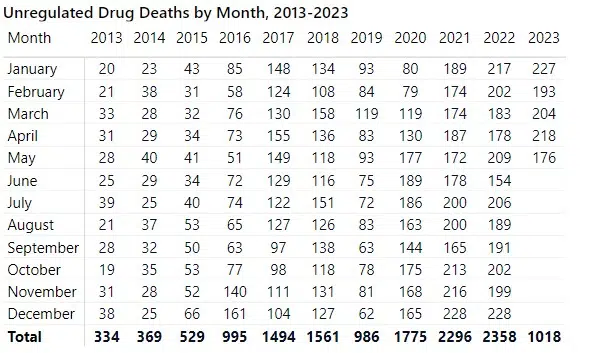
Across the province, they say there were 176 such deaths last month – an average of 5.7 deaths each day – taking the total on the year to 1,018 people.
While the May 2023 is down from both April 2023 (218) and May 2022 (209), the BC Coroners Service says the figures through the first five months of the year is a 2.9 per cent increase compared to the same time frame in 2022.
They also say at least 12,264 deaths have been caused by illicit drug toxicity since the public-health emergency was first declared in April 2016.
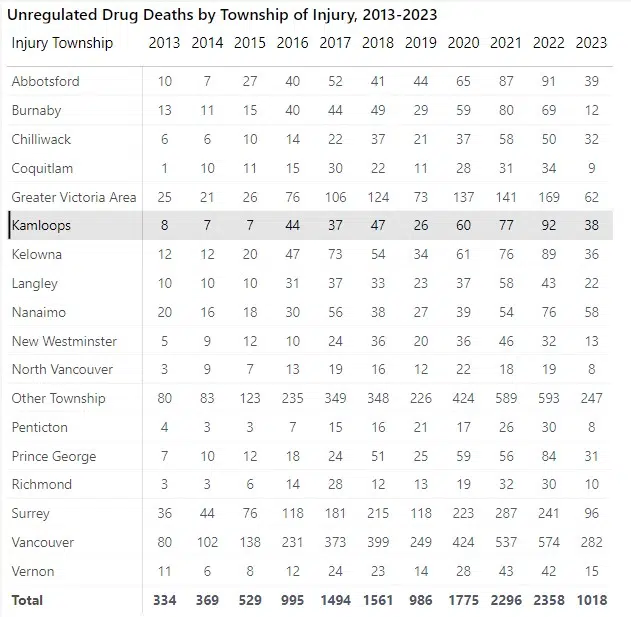
In Kamloops, there have been 421 toxic drug deaths since 2016, including a record 92 in 2022. With an average of 7.6 deaths each month this year, the City is on track to nearly match that record with 91.2 deaths this year.
“BC Coroners Service findings confirm that this public-health emergency continues to be driven by illicit fentanyl,” Chief Coroner, Lisa Lapointe, said.
“Expedited testing in 2023 is positive for fentanyl in almost nine out of every 10 results, nearly double the positivity rate of methamphetamine and cocaine, the next most commonly identified substances. As long as people are reliant on the profit-driven unregulated market to access the substances they need, their lives are at risk.”
Lapointe also said unregulated drug toxicity is now the leading cause of death among people aged 10 to 59 in British Columbia, accounting for more deaths than homicides, suicides, accidents and natural disease combined. Of the 10,453 toxic drug deaths reported between Jan. 1, 2017, and Dec. 31, 2022, she says 142 (1.4 per cent) involved people under the age of 19.
“We know that young people are not immune from the extreme dangers of the unregulated drug supply,” Lapointe added. “In responding to this health crisis, it is critically important that we heed the recommendations of experts and ensure a robust system of care that includes increased access to timely, evidence-based treatment and recovery services, and to a safer substance supply as an alternative to the toxic black market.”
“A public-health crisis of this magnitude demands a comprehensive response that meets people where they are and provides the services they need to survive.”