



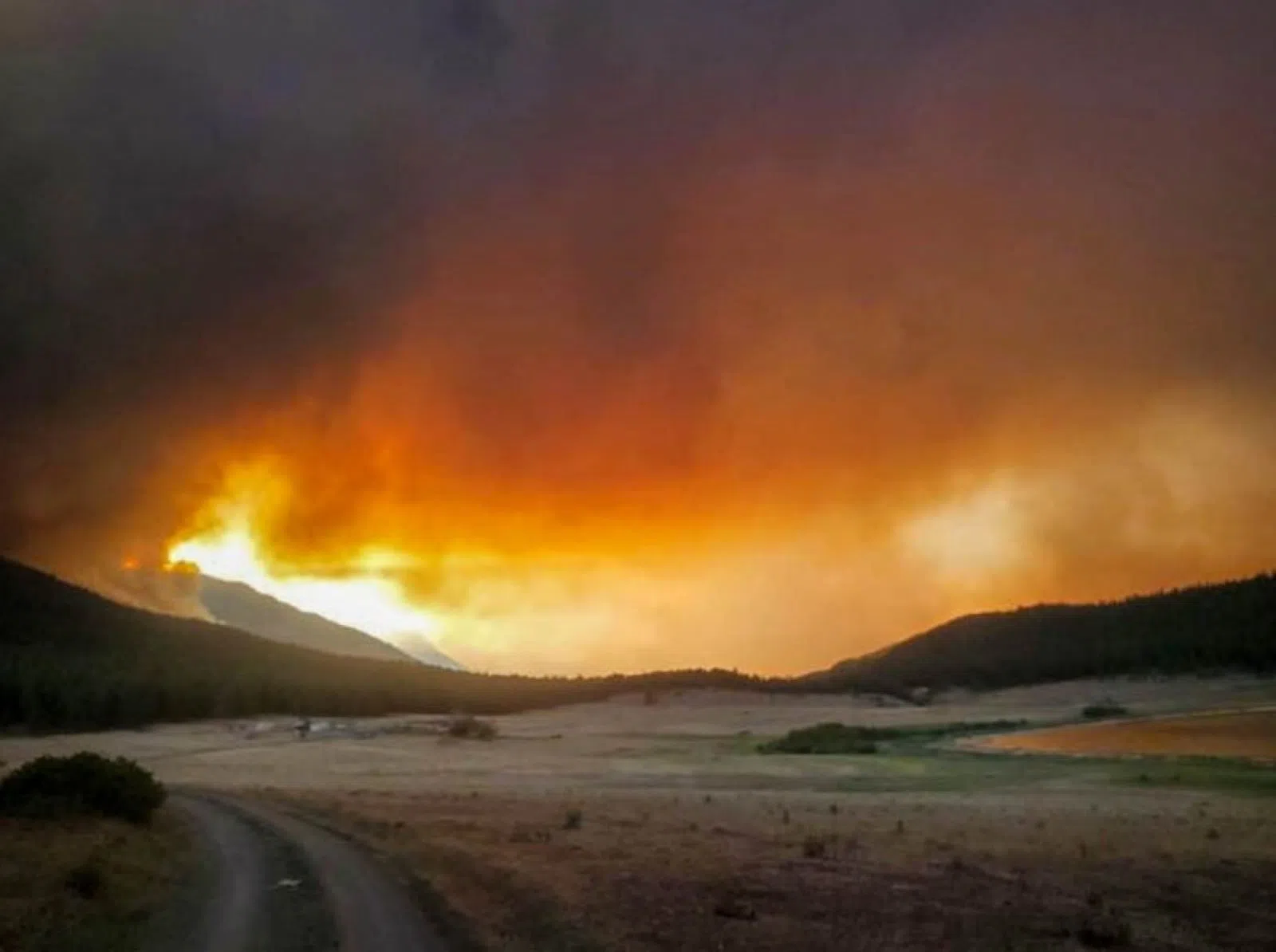
Fires burning in the Venables Valley in the summer/via Venablesvalleywildfire.com
The Thompson Nicola Regional District Director who represents the Venables Valley is lobbying for adjustments to insurance industry practices.
Tricia Thorpe, TNRD Area I Director, is bringing forward some ideas to share at the upcoming SILGA convention at the end of April.
The three resolutions being floated stem from the Shetland Creek Wildfire of 2024 which has left many residents picking up the pieces — many of whom were uninsured.
Thorpe suggests its unacceptable that these folks are on their own through the recovery process.
“They’re uninsurable or they can’t obtain insurance. Multiple people have been told they can’t get it,” said Thorpe.
“I have one woman that actually has a letter where her insurance was revoked, but she asked [for a review],” said Thorpe. “They reassessed it and she went through a whole bunch of hoops to try and be compliant.”
Thorpe says her constituent ended up not being given insurance, despite her efforts.
“They wouldn’t give her an extension,” said Thorpe. “Then when she went to apply for insurance, she was told that she couldn’t have insurance, partially because her insurance had lapsed…yet it was through no fault of her own.”
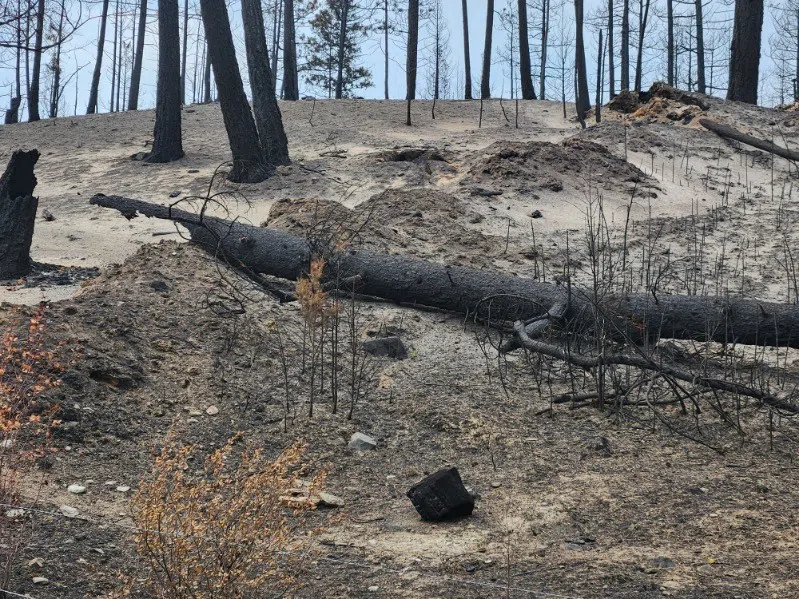
Burned out portion of land in the Venables Valley/via Tricia Thorpe
To try to stop this type of thing from happening, Thorpe is taking a set of proposals to be passed through SILGA to the Union of BC Municipalities.
They include demanding a level of accountability for insurance companies by requiring them to provide a letter of explanation as to why they are denying a homeowner insurance.
“What happens is a person will go in and they’ll ask for insurance, and they say, Oh, well, no, you can’t get insurance,” said Thorpe. “And that’ll be the end of it, simply because of where they live.”
Thorpe says if there are letters from insurance companies that explain why they were denied insurance, then those letters are proof to the government that they were denied insurance.
She says that could potentially make them eligible for Disaster Financial Assistance.
The BC government has been reluctant to provide DFA funding for wildfire losses, as fire is viewed as an insurable event.
“I think now that we’re seeing more of the so-called Urban Interface [fires], where we’re seeing more structures destroyed,” said Thorpe. “I think it’s become more prevalent since Lytton and Jasper, because it did hit more organized communities.”
Thorpe’s efforts are part of a call for draft resolutions to be put together by TNRD Directors in advance of the 2025 SILGA convention, which takes place in Merritt from April 29 to May 2.
To date, three resolutions have been submitted by Directors for TNRD Board approval.