




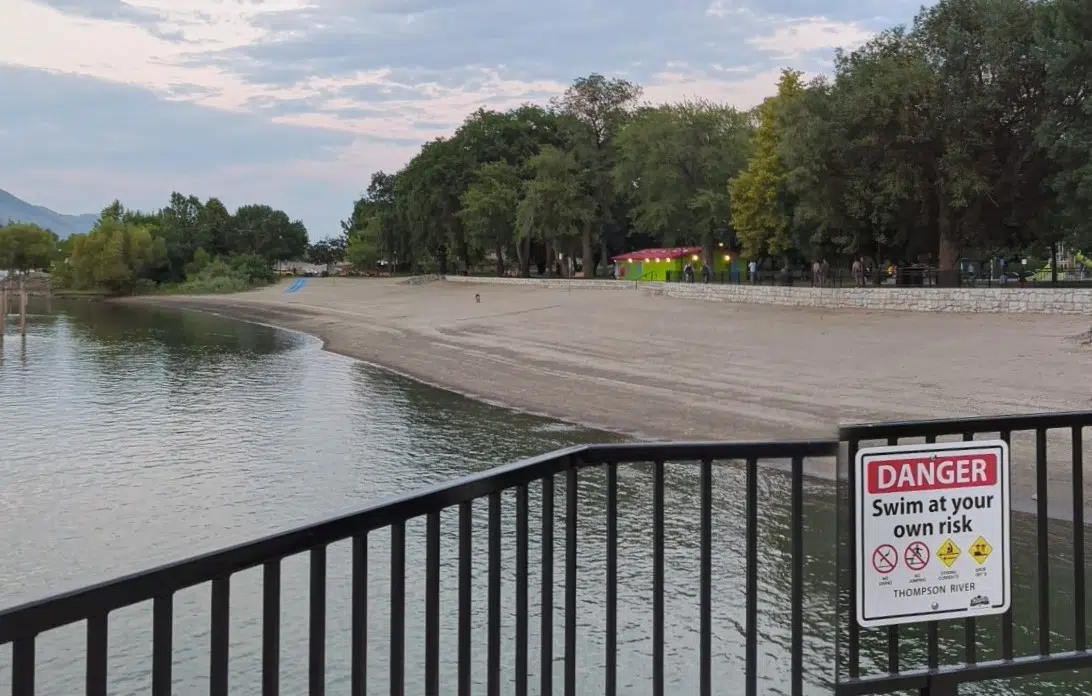
The Riverside Park beach in downtown Kamloops. (Photo via Google Maps)
As summer temperatures rise and residents flock to British Columbia’s lakes and rivers, officials are urging everyone to prioritize water safety to prevent drowning tragedies.
In recognition of National Drowning Prevention Week, the BC Coroners Service, alongside the Lifesaving Society and BC Emergency Health Services, is promoting key safety reminders following a new report showing a decline in drowning deaths.
In 2024, British Columbia recorded 98 accidental drowning deaths — an 18% decrease from 119 in 2023. Yet most fatalities still occur during the warm summer months, often in natural water settings such as rivers, creeks, lakes, and ponds.
“It is crucial for people to remain vigilant around water,” said Dr. Jatinder Baidwan, Chief Coroner of BC. “Understanding how drownings occur can help individuals and families make safer choices while enjoying the outdoors.”
The report reveals that accidental falls into water, swimming incidents, and bathing are the most common circumstances involved. Nearly all victims were BC residents.
The dangers of river swimming were highlighted earlier this summer by Kamloops Fire Rescue and city officials, who warned residents against swimming in the North and South Thompson Rivers due to fast currents, cold temperatures, murky water, and debris.
“We have water that’s high, some bank erosion, and the water is murky and cold,” said Josh Cowen, Fire Inspector with Kamloops Fire Rescue. “Cold immersion can lead to drowning, and the river conditions make swimming outside designated areas very hazardous.”
The City of Kamloops maintains one supervised swimming area at Riverside Park Beach, staffed by lifeguards from 1 p.m. to 5 p.m. daily from July 1 through mid-August. “That is the only spot we recommend for swimming,” Cowen emphasized. “Swimming elsewhere in the river is always at your own risk.”
The tragic drowning of 27-year-old Thompson Rivers University student Jatin Garg near Overlander Park in the Thompson River underscores these risks. Garg was swept away by a strong undercurrent while retrieving a volleyball on July 6. Despite rescue efforts, his body was found near MacArthur Island after a nine-day search.
Lenea Grace, Executive Director of the Lifesaving Society – B.C. & Yukon Branch, urged the public to take precautions: “Supervise children closely around all water environments, wear lifejackets when boating, stay sober on the water, and take swim lessons. Many drownings happen when people least expect to enter the water.”
The BC drowning report also highlights alcohol and drugs as contributing factors in 40% of deaths over the past decade. “Even strong swimmers can drown, especially when impaired,” warned Brian Twaites, BCEHS Paramedic Public Information Officer. “Staying sober saves lives.”
Additional key findings include:
-
77% of drowning victims were male
-
Highest proportions were among people aged 50-59 (20%), 60-69 (15%), and 70+ (15%)
-
The Interior Health region accounted for 34% of drowning deaths
Kamloops Fire Rescue encourages residents to always swim where lifeguards are present, wear personal flotation devices, avoid alcohol when swimming or boating, and always inform someone of your water plans.
“Just be smart,” said Cowen. “We all want to cool off during hot summer days, but make sure you have a plan and stay safe.”