




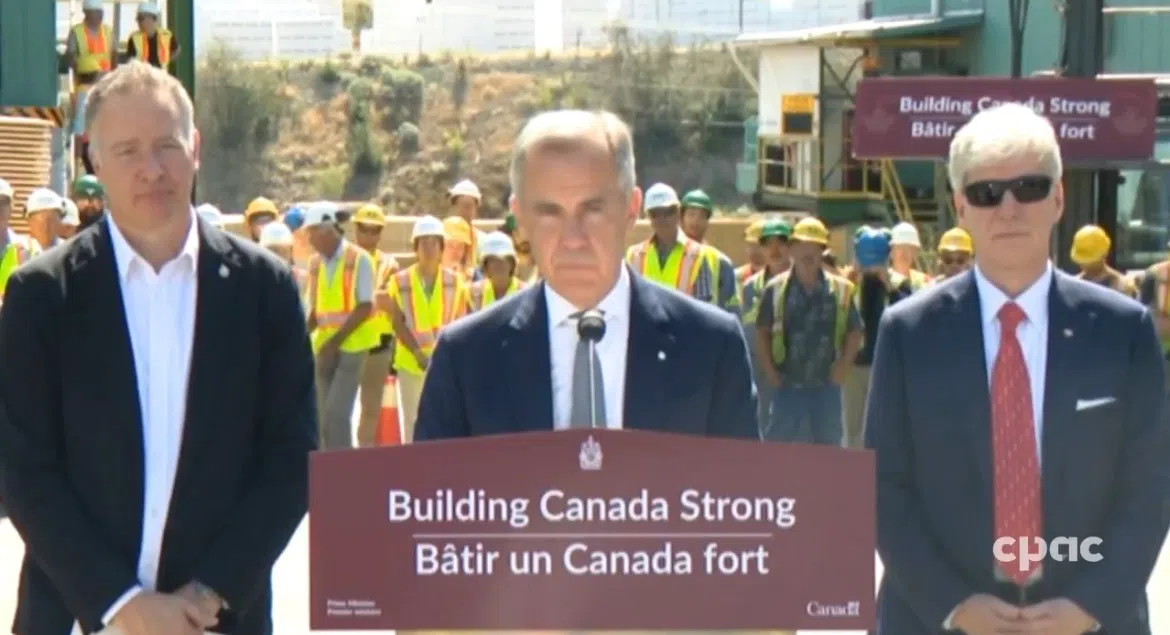
Prime Minister Mark Carney announced more than $1 billion in federal support for Canada’s struggling softwood lumber industry Tuesday, pledging to bolster domestic demand, diversify markets, and protect forestry jobs in the wake of steep new U.S. trade duties.
Speaking at the Gorman Bros. Lumber Ltd. mill in West Kelowna, B.C., Carney called the latest U.S. anti-dumping duties “unjustified” and said Canada must reduce its reliance on the American market. “This dependence creates costly uncertainty. It weakens our industry’s ability to weather downturns. It makes lumber more expensive,” he said.
To counter the blow, Carney unveiled a suite of financial measures, including:
-
$700 million in loan guarantees to provide liquidity to companies facing market pressure,
-
$500 million in grants and contributions to accelerate product development and international market diversification,
-
Millions for worker retraining and transition supports, and
-
A broader commitment to use Canadian lumber and workers to help build affordable housing through the government’s upcoming Build Canada Homes program, which will offer $25 billion in financing to homebuilders starting this fall.
“We will be our own best customer by relying on more Canadian lumber for Canadian projects,” Carney said, underscoring a pledge to use homegrown materials to meet the country’s housing needs.
Industry Responds: “Timely and Critical”
The announcement was welcomed by industry leaders, who said the measures offer vital short-term relief while broader trade negotiations continue.
“This support comes at a critical moment for forestry workers, communities, and companies across the country,” said Kim Haakstad, President and CEO of the BC Council of Forest Industries (COFI). “Initiatives aimed at supporting workers, fostering innovation, enhancing liquidity, and promoting export development are important steps toward stabilizing the sector.”
Haakstad emphasized the urgency of the situation in British Columbia — Canada’s largest forestry-producing province — where a combination of rising costs, reduced harvest levels, and trade disputes have devastated local economies and triggered thousands of layoffs in recent years.
The BC Lumber Trade Council (BCLTC) echoed those sentiments, calling the announcement “timely” and a necessary recognition of the industry’s challenges.
“We appreciate the federal government’s recognition that support is necessary in the face of ongoing trade uncertainty,” said Kurt Niquidet, BCLTC President. “We look forward to working with federal officials to ensure these programs are implemented quickly and effectively.”
Both organizations stressed that resolving the long-standing softwood lumber dispute with the United States remains a top priority — but said that bridging measures like these are essential to keep companies afloat in the meantime.
A Broader Vision for Forestry
Carney’s remarks also signaled a long-term vision to modernize and globalize Canada’s forestry sector. In addition to protecting jobs and helping struggling mills, the funding is intended to foster innovation, strengthen sustainability practices, and expand Canada’s footprint in emerging export markets.
“These investments lay the foundation for long-term competitiveness,” Haakstad said. “With coordinated action, we can build a more competitive, innovative, and resilient forest sector that supports jobs, communities, and climate goals across Canada.”
The federal support is expected to roll out over the coming months, with consultation from provincial governments and industry stakeholders to ensure it reflects regional realities, particularly in hard-hit provinces like B.C.
As Canada prepares to launch its Build Canada Homes program, Carney made clear that Canadian lumber will play a central role in the country’s housing future — and in a broader effort to chart a more independent economic path.
“We are going to write our own story,” he said, “rather than letting others dictate theirs to us.”