




From BCBC Economic Perspectives - Jul 28, 2025
A growing number of British Columbians are packing up and leaving for better economic opportunities elsewhere in Canada, setting a new record for interprovincial out-migration.
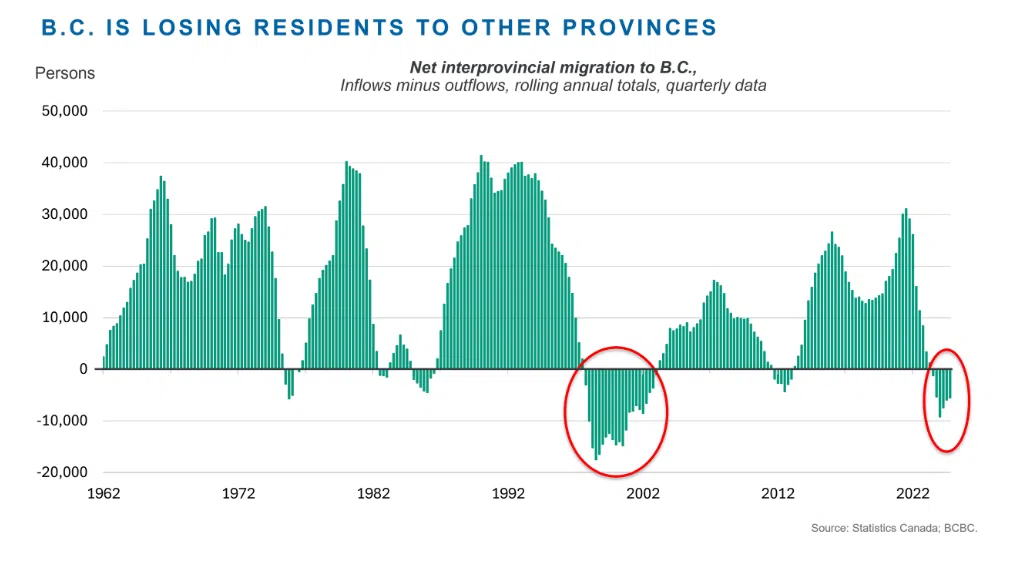
A new report from the Business Council of B.C. reveals that nearly 70,000 people left B.C. for other parts of Canada over the past year—a record-breaking level of interprovincial out-migration not seen since the late 1990s.
For decades, B.C. typically attracted more Canadians than it lost, gaining an average of 14,000 people per year from other provinces. But that trend has reversed. Since 2023, the province has experienced negative net interprovincial migration—meaning more people are leaving B.C. for other provinces than are moving in—with annual net losses ranging from 5,000 to 9,000 people. “This is a red flag for the provincial economy,” said David Williams, one of the report’s authors. “People are voting with their feet.”
Why Are People Leaving?
The record losses are being driven primarily by a sharp rise in out-migration, rather than a collapse in the number of people moving to B.C. In 2024, around 70,000 residents left the province—up from a long-term average of 48,000. In contrast, only 55,000 people moved to B.C. from other provinces, slightly below average.
Alberta and Ontario Leading Destinations
The majority of those leaving are heading to Alberta and Ontario, with Alberta taking the lion’s share—likely due to its higher incomes, lower taxes, and lower cost of living.
Outflows to Alberta have soared in recent years. In the 12 months leading up to early 2023, more than 35,000 British Columbians relocated to the neighbouring province—shattering previous records.
From BCBC Economic Perspectives – Jul 28, 2025
Who’s Leaving?
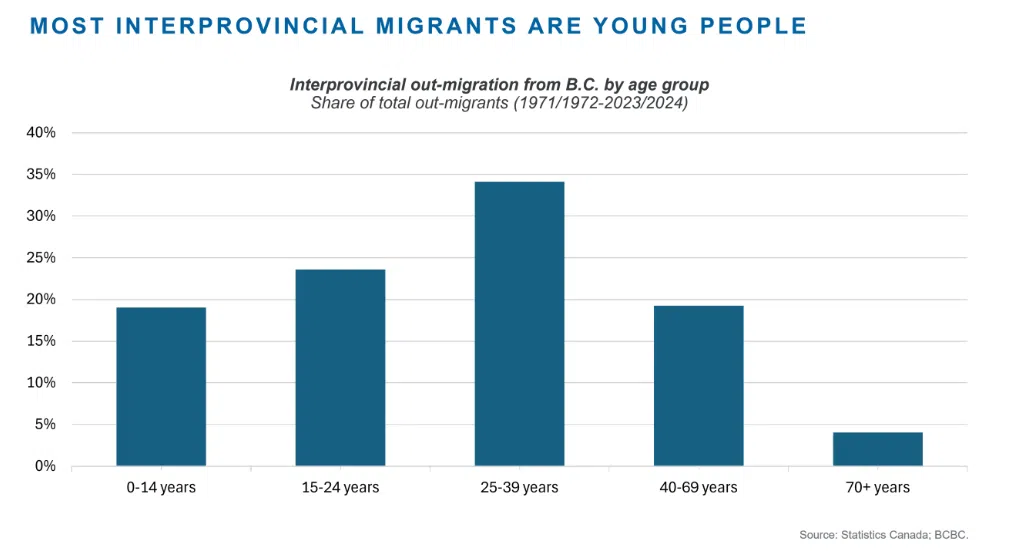
The report finds that young adults are most likely to leave. Over three-quarters of interprovincial migrants from B.C. have been under the age of 40, with the 25–39 and 15–24 age brackets making up the largest shares.
These migrants are not only young—they’re also typically highly educated and skilled, drawn to provinces with stronger job markets and better economic prospects.
What Does It Mean for B.C.?
The exodus of young, skilled workers could have long-term consequences for B.C.’s economy and public services. “These are often net contributors to the tax base,” said co-author Jairo Yunis. “Their departure puts additional strain on public finances and the labour market.”
Businesses may find it harder to hire, while the government may face higher fiscal pressures from a shrinking tax base, potentially leading to higher taxes or reduced public spending in the future.
A Call to Action
The Business Council is urging policymakers to revitalize B.C.’s private sector, warning that sustained population losses could undermine the province’s economic health. “Large, sustained out-migration is a canary in the coal mine,” the report says.
The Council has laid out a series of policy recommendations, focused on boosting competitiveness, improving productivity, and making the province more attractive for investment and skilled workers.
For now, it seems more and more British Columbians are choosing opportunity over scenery—and that’s a trend that should concern everyone.