



A Vancouver Island-based drone company is taking off in Kamloops, hoping proximity to the BC Wildfire Service Headquarters and Thompson Rivers University will position it at the forefront of drone-based firefighting and training in Western Canada.
Stinson Aerial Services, a family-run operation specializing in drone logistics for wildfire response and steep-terrain operations, is relocating the bulk of its operations from Courtenay to Kamloops. For General Manager Tim Stinson, the move is both strategic and overdue.
“Kamloops has been pretty central for us since we started,” Stinson said. “Probably 85% of the work we do is on that side of the water. We’ve often had to deploy from Courtenay, which meant losing most of the day just getting people into place. Being based here will let us respond faster and more efficiently.”
Night Ops and Infrared Scanning
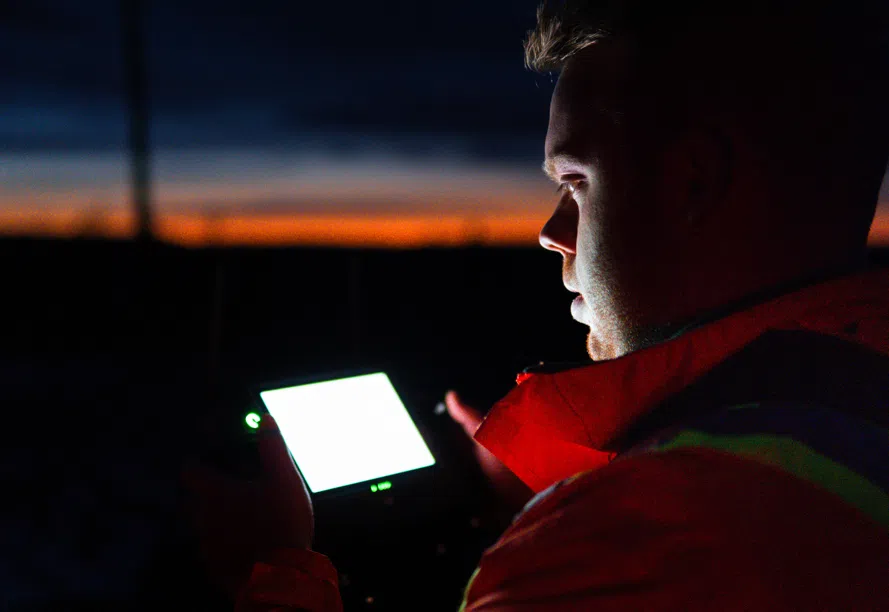
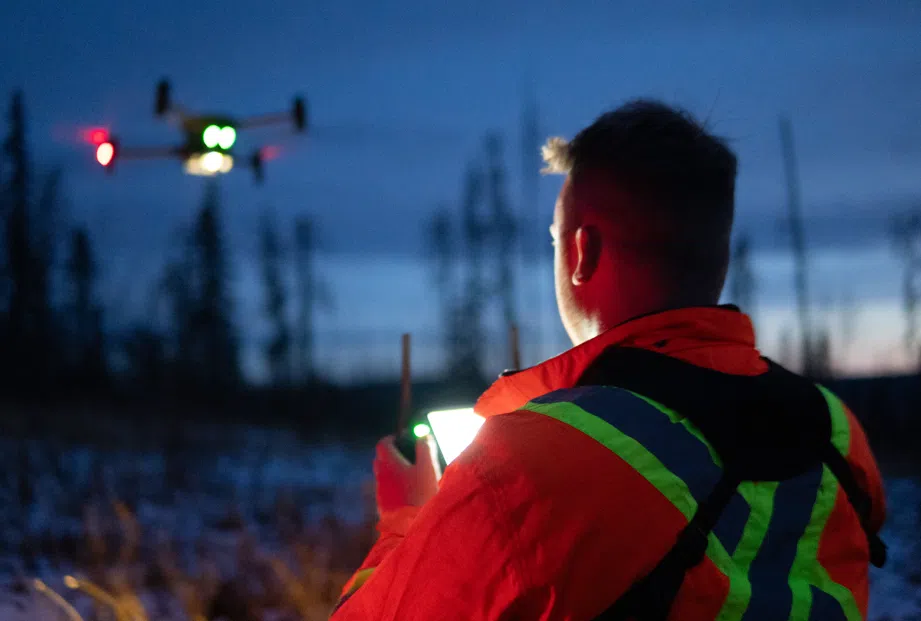
Since 2021, Stinson Aerial Services has been under contract with BC Wildfire to conduct nighttime infrared scanning of wildfire zones — vital work that maps out fire activity while crews rest.
“We operate night operations doing infrared scanning, typically from 9 p.m. to 6 a.m.,” said Stinson. “We provide a digitized, geo-referenced map to Incident Command. It involves two crew members, including one with GIS knowledge, and we need beyond-visual-line-of-sight (BVLOS) certification from Transport Canada since our drones can be flying six to eight kilometers out — and you can’t always see them at that range, especially at night.”
These operations allow fire command centers to gain a better understanding of hot spots and burn progression, without putting helicopter crews in harm’s way after dark.
A couple examples of some of the footage that Stinson Aerial has returned to the BC Wildfire Service can be seen at the bottom of this story.
A New Era of Wildfire Training
The company is also doubling down on training. Through its AIRS Flight Academy division, Stinson Aerial Services has partnered with TRU to offer a Basic Drone Pilot License Training course launching in September. The immersive 40-hour program meets all Transport Canada requirements and blends classroom learning with hands-on drone experience.
“For the past couple of years, we’ve worked with Tk’emlúps te Secwépemc to train community members through a wildfire bootcamp,” said Stinson. “We’ve been able to add drone training into that curriculum, giving future firefighters a head start in working with technology.”
In collaboration with TRU’s engineering department, Stinson helped develop a micro-credential that expands drone literacy for wildfire professionals and opens pathways to future careers in drone operations and logistics.
Growing Roots in the Interior
While the company hasn’t yet locked down a permanent office in Kamloops, it currently operates from a remote crew house on the city’s outskirts.
“We’re still scoping out the best location,” said Stinson. “But the goal is to downsize our Courtenay office and move most of the crew here. We’re seeing new opportunities not just in B.C., but in Alberta and Manitoba as well. Kamloops is the perfect hub for those operations.”
He added that the company hopes to be fully set up with a permanent office within the next year.
Expanding Capabilities: From Firefighting to Avalanche Control
Stinson Aerial Services is also working on a next-generation drone payload system that could transform how fire suppression is handled in hard-to-reach areas. The company is currently testing heavy-lift drones that can carry up to 100 pounds — enough for tools, supplies, or even water buckets for direct firefighting use.

“We’re still in the early days, but our hope is that BC Wildfire and others will see drones as a useful tool on the fire line,” Stinson said.
Beyond wildfires, the company is also pursuing contracts with the Ministry of Transportation to help with avalanche mitigation. Their drones have already participated in proof-of-concept tests near Duffey Lake to show they can safely carry and drop explosives for triggering controlled avalanches — a task that’s traditionally done by helicopters in dangerous whiteout conditions.
“If a drone goes down, a drone goes down. Nobody gets hurt,” said Stinson. “The idea is to remove risk for human pilots and prove the concept for safer winter operations.”
Looking Ahead
As Stinson Aerial Services plants deeper roots in Kamloops, its focus remains on scaling responsibly — balancing innovation with safety, and training with real-world use.
“This is still a relatively immature industry,” said Stinson. “We’re not just selling a service — we’re also educating people about what’s possible. But we’ve come a long way in six years, and Kamloops represents a turning point for us.”
With drones poised to play a growing role in wildfire response, avalanche mitigation, and terrain logistics, Stinson Aerial Services hopes its move to Kamloops is just the beginning of a broader transformation in how B.C. handles emergencies from the air — with fewer risks and faster response.
Learn more about Stinson Aerial Service here.