




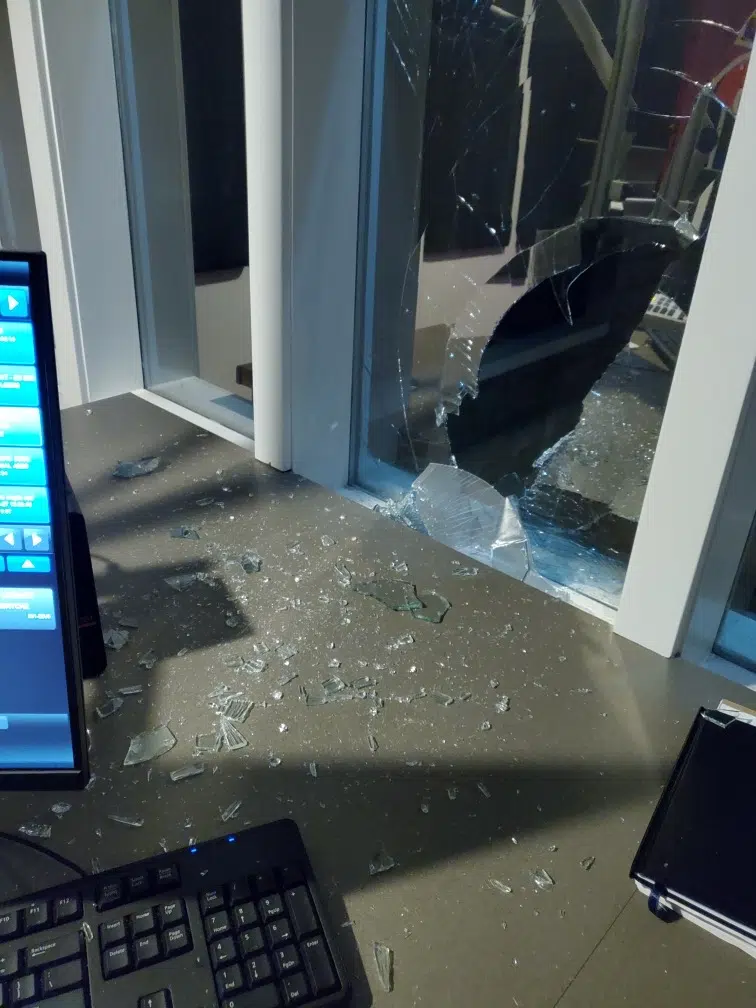
A new citywide business survey shows the financial toll of theft, vandalism and street-level crime continues to climb in Kamloops — even as fewer businesses are reporting incidents.
The annual Business Impact Survey, conducted by all Kamloops Business Improvement Associations along with the Chamber of Commerce and Scwénwen Economic Development Corporation, found 130 businesses spent more than $1.2 million over the past year dealing with issues such as shoplifting, property damage, and safety concerns.
Kamloops North Shore BIA executive director Jeremy Heighton says the numbers tell a troubling story. “While we had about a 26 per cent drop in reporting from the downtown core, we actually saw a 20 per cent increase in the costs related to crime and social disruption,” Heighton told Radio NL. “Some chain stores with hundreds of thousands in losses didn’t report this year. The actual increase is probably closer to 50 per cent.”
Safety Concerns Spread Across the City
The impacts aren’t limited to one neighbourhood. Clare Warner, executive director of the East Kamloops BIA, says businesses in Valleyview, Dallas and Campbell Creek are also feeling the effects.
She says the “convergence” of mental health challenges, housing instability and affordability pressures is driving many of the issues businesses are confronting daily.
In the downtown core, long-standing shops like Stereo Warehouse and Sister’s Sleep Gallery have dealt with persistent problems — from break-ins and building damage to open drug use and threats toward staff.
Owner Nina Sandhu says her family business has poured thousands into cameras, new lighting and fencing, but frustration continues to grow. “How much business are we losing because people say, ‘Why do I need to put up with this?’” she told CFJC. “We spent another $4,000 on cameras this year alone.”
Businesses Losing Confidence in Justice System
Heighton says the survey revealed something even more concerning: a widespread lack of confidence in the justice system. “Sixty-one per cent of respondents strongly agree that prosecution is questionable,” he says. “The problem isn’t the response agencies — it’s the system.”
He says calls to RCMP and Community Service Officers (CSOs) remain steady, and both agencies are resolving more incidents onsite. Roughly 60 per cent of surveyed businesses contacted CSOs in the last year, with 72 per cent reporting the officer was able to resolve the issue.
Heighton says patrol methods have improved, pointing to higher police activity in hotspots such as Lower Tranquille Road — where third-quarter crime rose 83 per cent — but he argues officers can only do so much without reforms to sentencing, bail and mental-health supports. “RCMP and CSOs are stepping in wherever they can,” Heighton says. “But they need policy reforms, justice reforms, and mental-health and complex-care investments to do their job.”
Underreporting Still a Major Barrier
One of the biggest concerns among business groups is the continued reluctance to report crime. Heighton says many owners feel police can’t help or that offenders won’t be held accountable, leading to fewer formal reports — and poorer data. “Everything needs to be reported. Everything,” Heighton stresses. “If we don’t have data, it doesn’t drive response teams. We have to have that reporting.”
Heighton recently met with local MLAs and MPs, noting MP Frank Caputo is pushing for federal Criminal Code and bail reforms, while provincial representatives are advocating for expanded mental-health and complex-care services.
Crime-Prevention Spending Levels Off, But Damage Costs Climb
While many businesses have already invested in cameras, gates and lighting — causing prevention-related costs to level out this year — the financial damage from theft and vandalism continues to rise. “Now it’s really about getting a handle on the criminal side,” Heighton says. “Whether it’s organized crime or convenience crime, we need a proactive approach from all levels of government.”
Despite receiving an acknowledgement from the Premier’s office this week, Heighton says business groups will continue pushing for action. “Our hope is that UBCM, municipalities and response agencies take up the call and say we deserve better — and that the province will listen.”