




The Nicholson Fire Department conducts training to ensure they have sufficient water flow. (CSRD Fire photos)
Three fire departments in the Columbia Shuswap Regional District—Eagle Bay, Swansea Point, and Nicholson—have achieved the Superior Tanker Shuttle Service Accreditation, a national certification that recognizes their ability to provide high-capacity fire protection in rural areas without fire hydrants.
“This is a very high standard to meet and a very stringent test,” said Sean Coubrough, Regional Fire Chief and Manager of Protective Services for the district. “The firefighters’ efforts to successfully pass this test are a true reflection of the dedication of each of our members, and their work has a direct benefit to their communities.”
Rural firefighting presents unique challenges. Unlike urban centers, where hydrants provide an immediate water source, these departments rely on tanker shuttle operations—using fire trucks to transport thousands of gallons of water to fire scenes. To qualify for the certification, teams must move 1,000 gallons of water per minute for two hours, starting within five minutes of arriving at a scene. This requires careful coordination, precise timing, and intensive practice.
“Once we get the water flowing and establish a rhythm, it just seems to flow from there,” said Coubrough. “We often have two, three, or even four tenders in operation at once, depending on the distance to the water source, with 20 to 60 firefighters involved in a single operation. The level of commitment from our paid on-call firefighters never ceases to amaze me.”
The process to achieve the accreditation is rigorous. Departments must coordinate with mutual aid partners, ensure consistent water flow to homes within their fire protection area, and maintain the standard under scrutiny from independent examiners. Coubrough emphasized that months of preparation and training are required, with firefighters practicing timing, flow rates, and team coordination repeatedly before the official test.
The benefits extend beyond safety. The Fire Underwriters Survey sets dwelling protection grades nationally, which insurers use to determine rates. “Instead of raising taxes to install hydrants throughout the community, we have a fire department that can move water efficiently,” Coubrough explained. “In many cases, this should qualify homeowners for lower fire insurance premiums.”
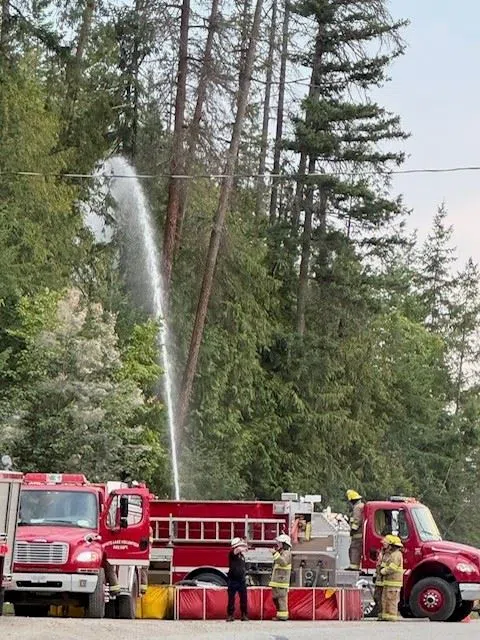
The Eagle Bay Fire Department spraying water during their accreditation exam. (CSRD Fire photos)
These three departments are now the seventh, eighth, and ninth in the district to achieve the Superior Tanker Shuttle Service Accreditation, joining Anglemont, Celista, Scotch Creek/Lee Creek, Shuswap, Tappen Sunnybrae, and White Lake. The accomplishment highlights the region’s commitment to maintaining high standards of fire protection, even in sparsely populated areas.
Coubrough also praised the sense of community that drives firefighters to volunteer. “Our paid on-call firefighters are held to the same standards as any full-time career department. They donate their time, train rigorously, and step up when emergencies strike. Their dedication is inspiring, and it strengthens our communities from the inside out.”
In addition to improving safety, the accreditation reflects the adaptability and resourcefulness of rural fire departments in the face of growing wildfire risks and changing climate conditions. Residents in Eagle Bay, Swansea Point, and Nicholson can now take comfort knowing their local fire departments are nationally recognized for excellence—and that their commitment may bring financial benefits in the form of reduced insurance rates.