



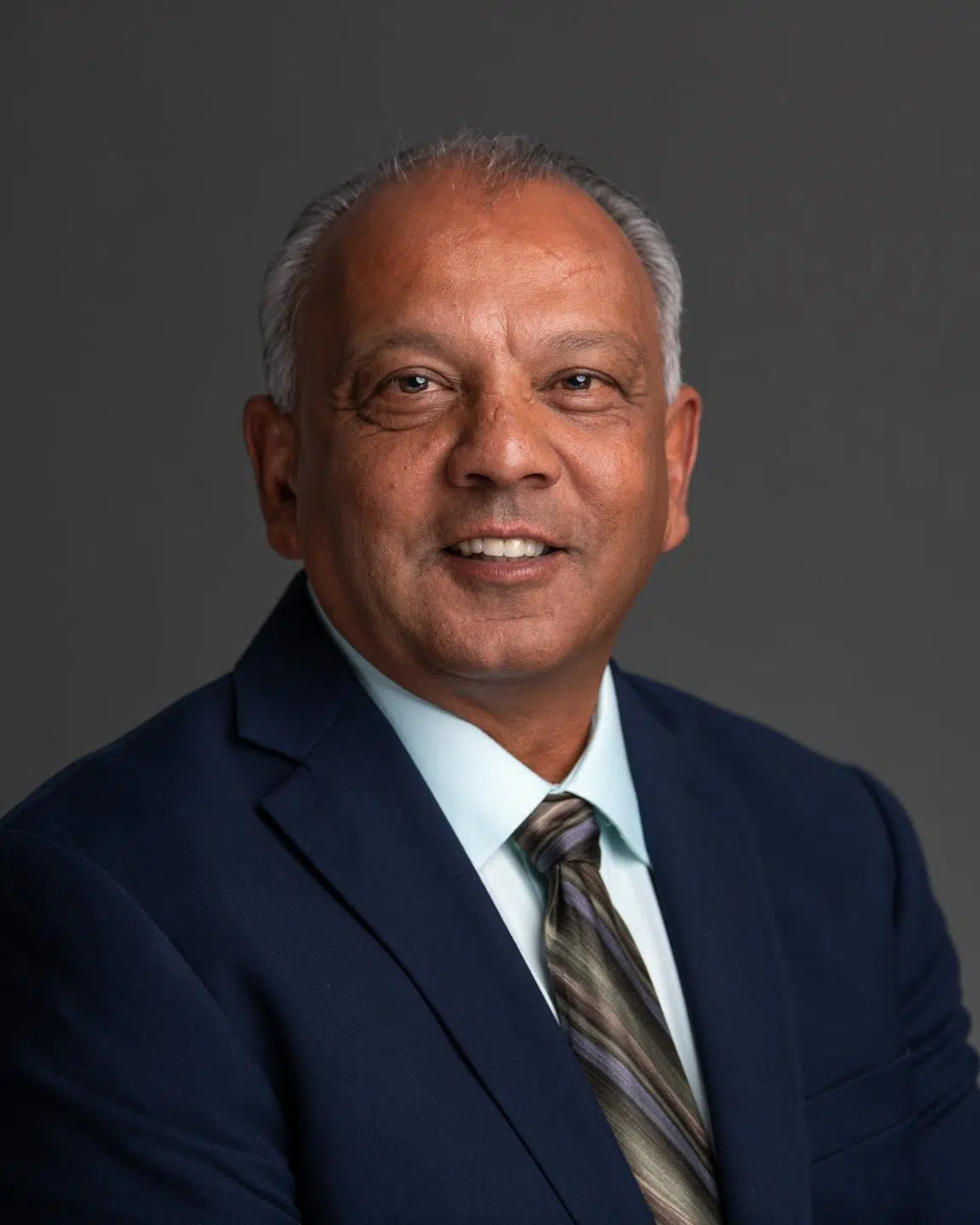
Kamloops Councillor Bill Sarai
Kamloops city councillor Bill Sarai is calling for greater local government involvement in the implementation of British Columbia’s reconciliation and heritage policies, citing growing uncertainty for municipalities and residents as the province navigates potential amendments to the Declaration on the Rights of Indigenous Peoples Act (DRIPA).
At last week’s council meeting, Sarai introduced a resolution urging the provincial government to formally include municipal representatives in discussions surrounding DRIPA, archaeology processes, and the Heritage Conservation Act. The resolution passed unanimously and will be forwarded to the Southern Interior Local Government Association (SILGA) and other regional municipal associations across the province.
“Why now? Because the processes are unclear, and municipalities like ours are on the ground dealing with the impacts every day,” Sarai said to Radio NL. “Policies and agreements are being formed in Victoria without including us, yet they directly affect our permitting, our Official Community Plans, our land use planning—and ultimately, our budgets. If the province wants these policies implemented, there needs to be funding attached.”
Sarai explained that recent developments, including the Cowichan Tribes land claim in Richmond and ongoing discussions over land in Kamloops and Sun Peaks, have heightened local concern. Residents have reached out to the city seeking guidance, he said, but municipal councils have limited clarity on how DRIPA and heritage legislation are applied across the province.
“There’s a real gray area that creates anxiety and fear,” Sarai said. “We need clear processes: if archaeological finds occur, here are the steps, here’s the appeal process, here’s the funding source, and here’s who to contact. That clarity doesn’t exist right now, and that’s what this resolution is trying to address.”
The resolution is also designed to respect and build on Kamloops’ relationship with Tk̓emlúps te Secwépemc, which has been recognized nationally for its collaborative approach with the city. Sarai consulted with Tk̓emlúps officials before bringing the resolution forward. Sarai said he was told that his efforts were “long overdue,” emphasizing that current processes vary widely across municipalities and create confusion for both Indigenous communities and local governments.
“We need consistent policies and processes across the province so that municipalities and First Nations know what to expect,” Sarai said. “By walking together, we can advance Truth and Reconciliation. By walking separately, we don’t help anyone.”
The resolution arrives at a politically sensitive moment. Earlier this week, the provincial government asked the Supreme Court of Canada to hear an appeal regarding DRIPA following recent court decisions that sided with First Nations on mineral and property rights, including the Gitxaala First Nation case and the Cowichan Tribes land claim. The province is also proposing amendments to the legislation in the coming legislative session.
Robert Phillips, a member of the First Nations Summit political executive, criticized the proposed changes, saying they risk “gutting” DRIPA and creating political and economic uncertainty. “It’s either shared decision-making or it is not,” Phillips said. “It’s either legislative alignment or it is not. The Premier’s proposed amendments threaten the alignment.”
Premier David Eby defended the proposed approach, framing DRIPA as a “road map” for First Nations and governments to resolve shared concerns without resorting to litigation. He cited the first-ever consent-based decision-making agreement between the Tahltan First Nation and the provincial government as an example of the act in practice. However, the B.C. Court of Appeal ruling in the Gitxaala case and the B.C. Supreme Court ruling in the Cowichan case have created “confusion and concern” about DRIPA’s intent, according to the province.
For municipalities like Kamloops, these legal and legislative developments have immediate implications. “Our taxpayers shouldn’t be footing the bill for policies made in Victoria,” Sarai said. “If decisions are going to be made at the provincial level, the funding should come from Victoria or Ottawa. That’s the ask we’re taking to SILGA and other municipal associations.”
Sarai hopes his resolution will unify municipalities across British Columbia, ensuring local governments have a seat at the table as DRIPA policies and heritage legislation are reviewed. “The resolution has already sparked interest from councils from Lake Cowichan to the Lower Mainland. We want to meet with the Premier and ministers in Victoria so everyone knows where we stand and what resources are needed to implement these policies effectively,” he said.
The councillor emphasized that the resolution is not intended to create division, but rather to strengthen collaboration between municipalities and Indigenous communities. “Kamloops and Tk̓emlúps te Secwépemc have a playbook for how this can work. We hope other municipalities and the province can learn from that,” Sarai said.
As the SILGA conference approaches, Sarai said the next steps involve detailed discussions with municipal associations and preparation for meetings with provincial leadership. “The hard work starts now,” he said. “But it’s worth it if it ensures clarity, consistency, and fairness for municipalities, Indigenous communities, and taxpayers alike.”