




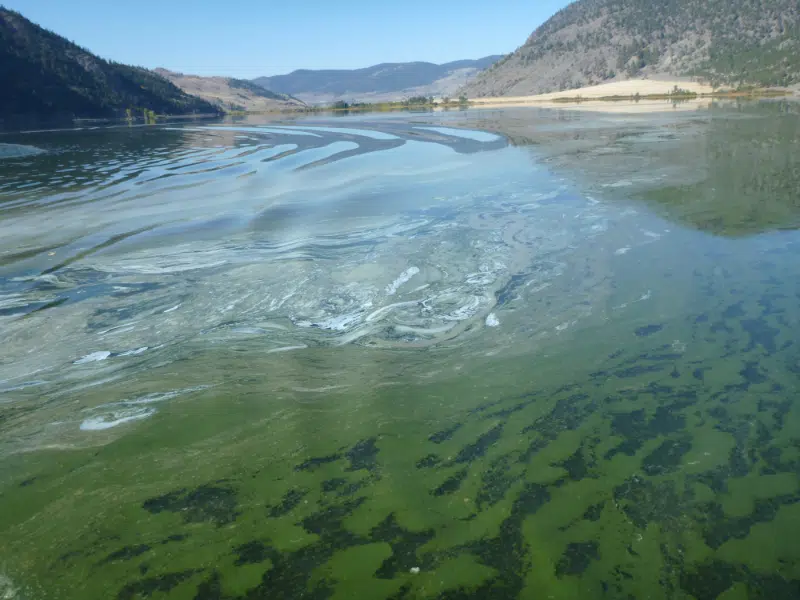
Algal Bloom on Nicola Lake in July 2015. (Photo via BC Government)
Interior Health is warning people who use Nicola, Douglas, and Chapperon lakes near Merritt about the risk of exposure to cyanobacterial toxin due to the presence of blue-green algae blooms.
“Water samples taken on July 26 from each lake tested positive for the cyanobacterial toxin,” Interior Health said in a statement Friday. “Cyanobacteria can produce several types of toxin that can be poisonous to people, pets and livestock.”
“Exposure to cyanobacteria toxin can occur through ingestion of or contact with contaminated water.”
Residents in the area who get their drinking water either of those lakes, whether it be for themselves or for their pets and livestock, are being told to find another source like bottled water.
People are also being told to not swim in these lake and to avoid things like boating and waterskiing as well. If your skin comes in contact with the water, IH says to rinse it off with clean water immediately.
“Exposure to the toxins can result in symptoms that are visible shortly after exposure including dizziness, cramps, diarrhea, skin rash, and mouth blisters (from ingestion),” IH added.
“If you show symptoms that may be linked to cyanobacteria exposure, contact your physician.”
Interior Health has already closed the beaches along Nicola Lake – including Monck Provincial Park – because of the presence of blue-green algae.
The say while blue-green algae is a natural part of the aquatic environment, prolific growth can cause cyanobacteria blooms to form, resulting in water either looking or smelling bad.
“Algae blooms can remain in a water body for weeks to months,” IH added.
“Once the bloom is no longer present and two consecutive sets of samples do not show the presence of cyanobacteria toxin, Interior Health will review any beach closures and/or advisories.”
For more information, on blue-green algae, go here. To report other algae blooms, go here.