




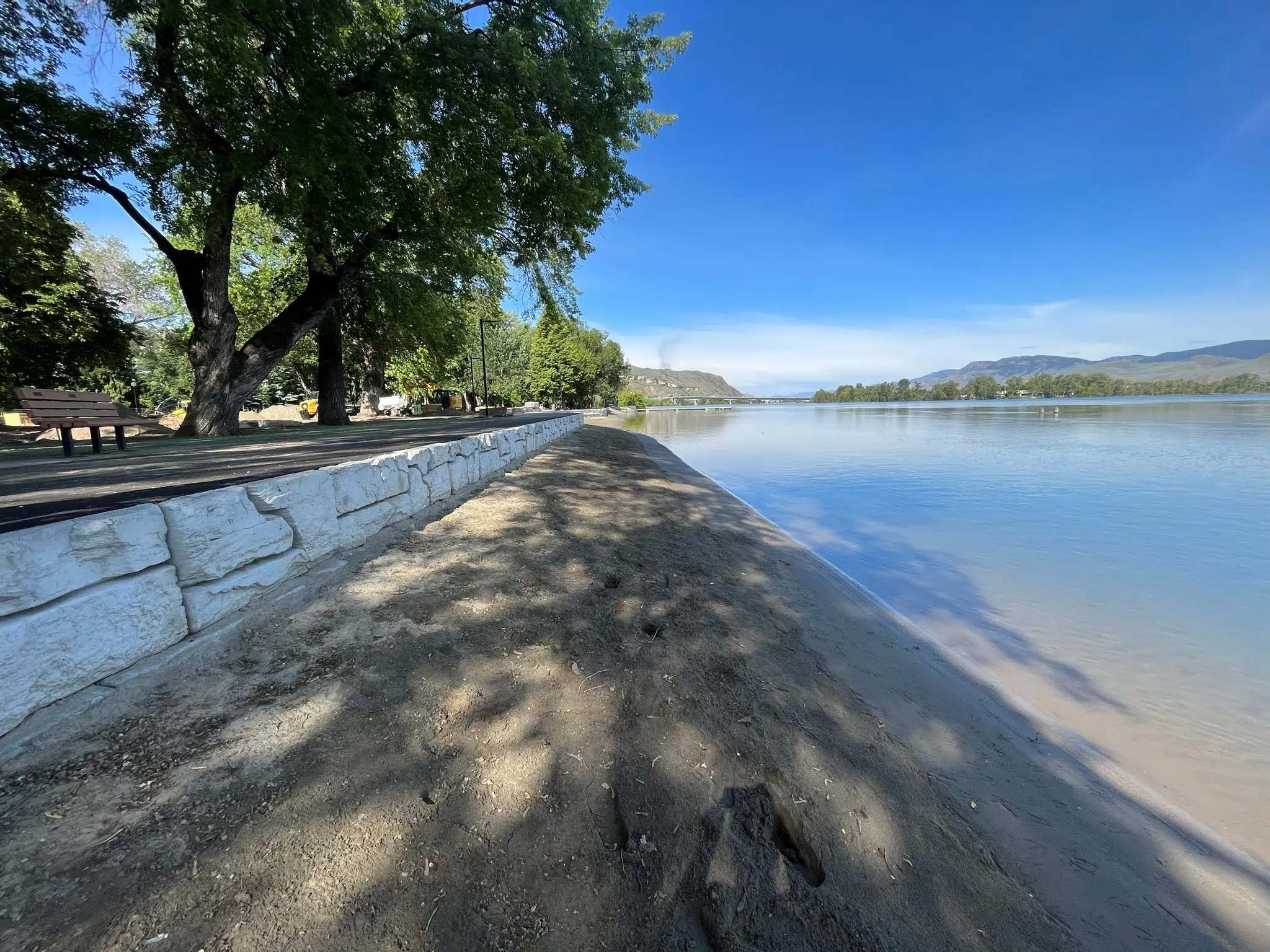
A new retaining wall disguised as a multi-use path meant to protect Riverside Park to a one-in-20 year flood. (Photo via City of Kamloops)
The City of Kamloops says while some capital projects over the last two years came in over budget, it was able to keep overall costs under control.
Capital Projects Manager, Matt Kachel, told Council the City has managed about $130-million in large capital projects since the last update was presented to Council in Dec. 2021.
He says the projects that were completed between Dec. 2021 and Dec. 2023 came in about $3-million – or 3.4 per cent – under budget.
“By comparison to the last report, they were about 2.4, so we’re in the ball park of where other reports have been, so I was really happy with that,” Kachel said. “These have been in various stages of completion and the costs were all reconciled up to December of 2023.”
“I wanted to remind everybody to what this period captured, which was that rapid inflation where a sheet of plywood went from $35 to $85, but we were still able to come in really, really good on this.”
Projects completed over the past two years include a sewer main upgrade along Fourth Avenue, a new multi-use pathway in Sahali, as well as dike upgrades McArthur Island and Riverside Park.
He also said the “most challenging project” – the $13.7 million Pemberton water system upgrades in Greenstone Park – is currently underway, and expected to come in under budget.
“When we were putting the pipe in, I don’t know if anybody drove by, but it was quite the sight with all the bedrock we had to remove,” Kachel said. “Everything went really, really well out there.”
“We’re on to landscaping now, we’re just putting irrigation lines in and putting the park back together, but the water system is functional, the reservoir is in, and the pump station is fully operational.”
In a report to City Council, Kachel said changes to the way the City does capital projects put it “ahead of the curve” as staff worked to secure master service agreements, allowing City staff to mitigate and plan for risks by collaborating with designers and builders during the planning stages.
“This has resulted in reliable construction schedules, fewer change orders, and a sense of ownership by all parties involved,” the report said. “While many other public sector owners struggled to get bids on tenders and were forced to carry funds forward, the City delivered a record amount of capital construction.”
“Instead of just carrying a huge contingency and hoping for the best, we actually planned out those risks, and if they did happen, then we had budget available to deal with them,” Kachel added.
Moving ahead, Kachel does caution that while there have been some successes over the past few years, his team appears to be hitting a breaking point, in part because of new things like provincial housing targets.
He also says other challenges include new sustainability targets, as well as a changing climate, saying the city has to be able to adapt so it doesn’t fall behind.
You can find Kachel’s full report here.