




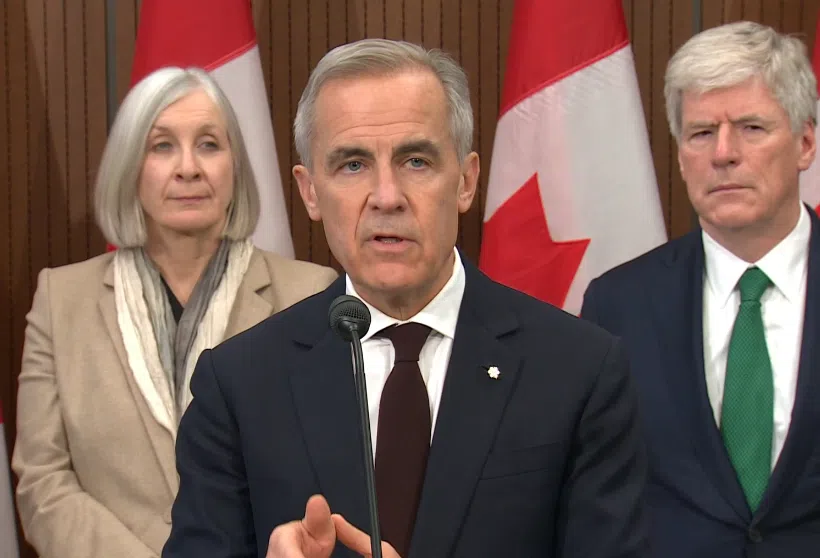
British Columbia’s forest sector cautiously welcomed Prime Minister Mark Carney’s sweeping package of new supports for Canada’s softwood lumber industry on Wednesday, saying the measures could help stabilize BC’s struggling mills—but only if delivered quickly and paired with long-term solutions.
The announcement includes major financing tools, reduced freight costs, a Buy Canadian procurement policy, and a new single-window system for federal supports. With BC home to the country’s largest lumber producers, industry groups say the region stands to be among the biggest beneficiaries.
COFI: Support Is Welcome—But Needs to Arrive Fast
Kim Haakstad, President and CEO of the BC Council of Forest Industries, said the federal plan recognizes the industry’s importance at a time of “escalating U.S. duties, trade uncertainty and competitiveness challenges.”
But she warned that speed will determine whether the measures actually help.
“While application processes are open, companies are still waiting too long for decisions,” Haakstad said, noting that year-end planning pressures are mounting. “Timely rollout and clear timelines will be essential.”
Haakstad also stressed that long-term stability requires a negotiated softwood lumber agreement with the United States, and pressed the Province of BC to continue improving mill access to logs.
BC Lumber Trade Council: A Step in the Right Direction
The BC Lumber Trade Council also welcomed the measures, calling them an important bridge for companies navigating “unjustified U.S. tariffs and sustained market uncertainty.”
“We appreciate the federal government’s recognition that urgent support is required,” said BCLTC President Kurt Niquidet. “But ultimately, a negotiated agreement is the path to long-term stability.”
BCLTC emphasized that program design and delivery must ensure supports are rapidly accessible, particularly in regions of BC where impacts are most severe. The Council also called for aligning short-term assistance with broader efforts to strengthen competitiveness and expand market access.
BC Stands to Gain—If Programs Roll Out Smoothly
Carney’s package includes a 50% cut to interprovincial lumber freight rates, $1 billion in new financing tools, a forthcoming Buy Canadian requirement for major federal projects, and a new single-window support system, alongside a national task force to guide long-term sector transformation.
For many BC communities dependent on forestry, the measures offer some relief after years of closures, curtailments, and U.S. duties. But industry leaders agree: federal aid can steady the sector only temporarily.
A durable U.S. softwood lumber agreement, they say, remains the only path to lasting stability for BC’s forest economy.