




Kamloops counted 419 people experiencing homelessness over a 24-hour period in October 2025, according to results presented to council this week.
The update was delivered by Social Development and Housing Supervisor Karina Latras and Social, Housing, and Community Development Manager Natasha Hartson, who outlined both the latest data and the city’s ongoing response efforts.
Snapshot of homelessness in Kamloops
The 2025 Point-in-Time (PiT) Count took place Oct. 15 and 16. The nationally recognized methodology provides a one-day snapshot of how many people are experiencing homelessness and allows communities to compare trends year over year.
This year’s count focused on enumeration — the process of counting individuals — with full demographic surveys now set to take place every three years. Annual counts will continue each October.
According to the city:
-
274 individuals were staying in 10 local shelters, representing a 95% occupancy rate that night.
-
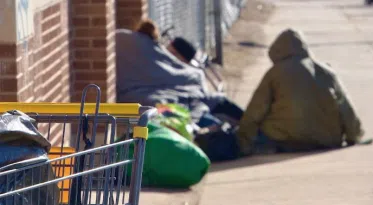
136 individuals slept in unsheltered locations.
-
Nine people reported couch surfing.
That brings the total number of people counted as experiencing homelessness in Kamloops to 419.
Additional data was gathered but not included in the official total to maintain consistency with previous years. Volunteers observed 48 people who appeared to be unhoused but did not participate in surveys. Another 27 unhoused Kamloops residents were identified in the B.C. Corrections system and at Royal Inland Hospital’s emergency department on the night of the count, along with 12 individuals staying in local treatment centres.
Community collaboration behind the count
Latras emphasized the significant collaboration required to carry out the count, crediting the city’s Housing and Homelessness team and community partners for their work.
Two “magnet events” were held to encourage participation and reach people experiencing hidden homelessness. One was hosted by the Kamloops Aboriginal Friendship Society on the South Shore, and the other by ASK Wellness on the North Shore.
The events offered food, warm gathering spaces, cultural resources and health services, with support from Interior Health. City staff said the events not only improved participation but also created opportunities to connect people with services.
A growing crisis across B.C.
Hartson told council that Kamloops is not alone in facing rising homelessness.
Communities including Victoria, Greater Vancouver and Abbotsford have also reported increases in their 2025 counts.
She described homelessness as a complex, systemic issue shaped by housing affordability, the toxic drug crisis, access to health care and social supports, and broader structural inequalities.
“There is no single cause and no single solution,” Hartson said, adding that sustained collaboration between governments, service providers, businesses and the public is essential.
Shelter capacity stretched
Emergency shelters remain a central part of Kamloops’ response.
The city currently has approximately 267 year-round shelter beds. During the winter season, an additional 40 temporary beds are added, along with 35 overflow beds during extreme weather events.
Despite those measures, shelters regularly operate at or near full capacity, leaving more than 100 individuals without a bed on many nights.
City staff said they continue to work with BC Housing and community partners to maintain and expand shelter capacity, while also focusing on longer-term solutions such as supportive housing, affordable housing development, improved case management, and better access to mental health, substance use and health services.
Balancing urgent and long-term solutions
Hartson stressed that while immediate interventions — such as shelter expansion and enhanced outreach — are critical, they must be paired with long-term strategies addressing root causes like income supports, housing affordability and systemic barriers within health and justice systems.
She acknowledged that meaningful progress will take time and sustained effort.
“Failure to act results in significant social, economic and moral costs,” she said, urging continued partnership across sectors.
The city is already preparing for the next full demographic survey in October 2026, as annual enumerations continue to track trends and inform policy decisions.