




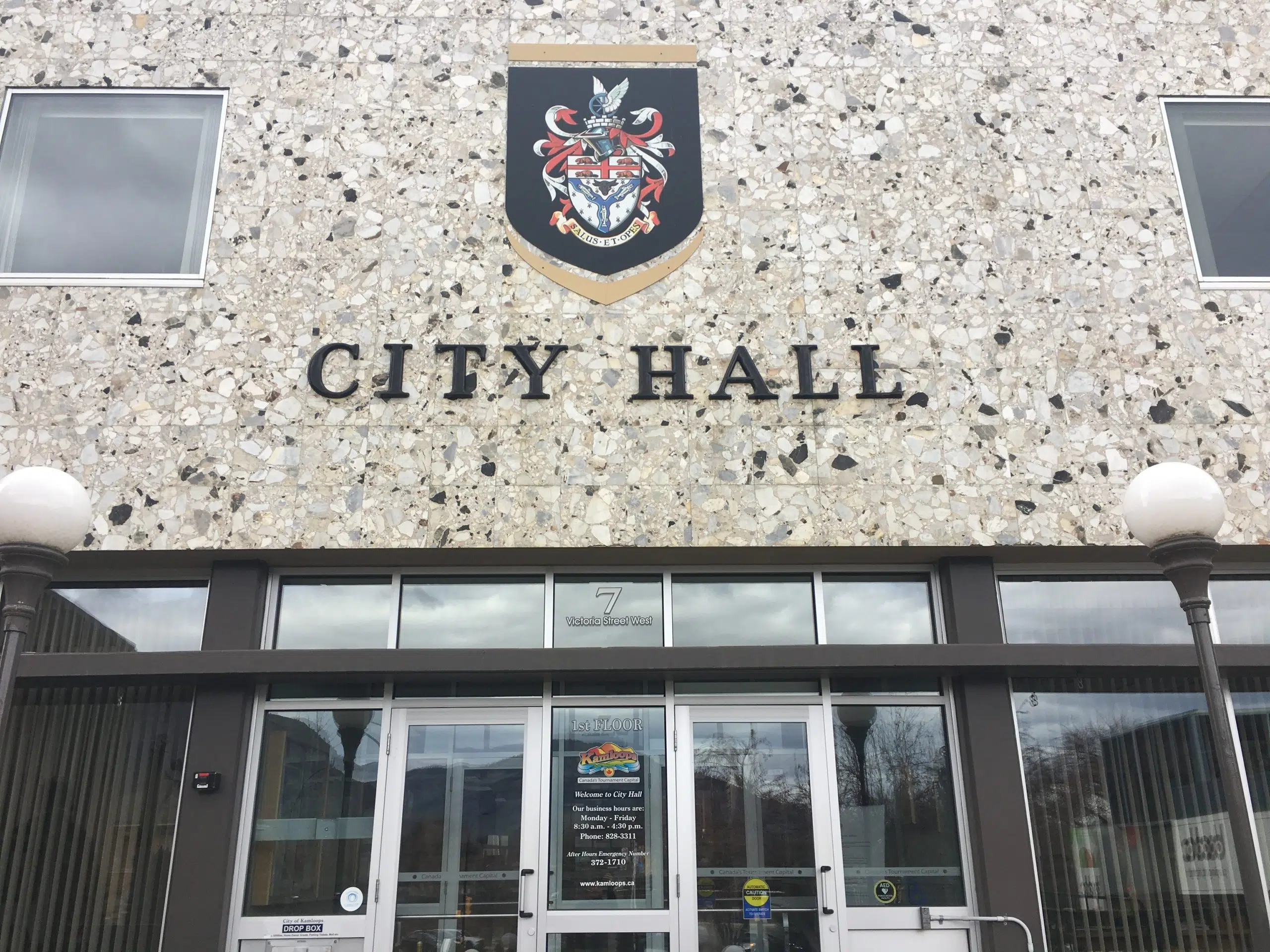
Kamloops city council has approved a bylaw allowing the municipality to borrow up to $40 million on a short-term basis to manage cash flow until property tax revenue begins arriving later in the year.
The borrowing authority, known as a revenue anticipation borrowing bylaw, was introduced to council Tuesday by Financial Services Manager Lewis Hill. Council voted to give the bylaw first, second and third readings.
City staff emphasized the measure is essentially a municipal line of credit, used to smooth out timing gaps between expenses early in the year and property tax revenue that typically arrives between late May and July.
“This is no different than a line of credit that businesses or individuals would use,” Hill told council during the meeting.
Why the city needs the borrowing authority
According to a report presented to council, there is nearly a six-month gap between the start of the fiscal year and the collection of property taxes, the city’s largest revenue source.
During that period, the city still needs to cover ongoing costs such as payroll, vendor payments and operations.
The report states that historically the city could rely on investments tied to reserves to help manage this gap. However, reserves have increasingly been used to lower tax rates and fund large capital projects, reducing their availability as a cash-flow buffer.
Hill told council the city typically maintains $15 million to $20 million in cash on hand, while monthly expenses range from $30 million to $40 million.
“At one point last year we dipped down to about $9 million in the bank,” he said. “A couple of days later revenue came in and brought it back up. This is just trying to deal with that kind of variability.”
Borrowing could be cheaper than using reserves
Hill said borrowing the funds can actually make financial sense because the city’s investments are currently earning more interest than the cost of borrowing.
City investments are earning roughly 3.25% to 5.25%, while borrowing through the Municipal Finance Authority (MFA) is about 2.8%.
Using a $5-million example, Hill said borrowing for three months would cost about $70,000 in interest, while selling investments would mean losing about $100,000 in investment income.
“In that case, the city actually comes out ahead by about $30,000,” he said.
Selling investments also creates another risk: the city may later have to repurchase investments at lower interest rates, locking in reduced returns for years.
Why the limit is set at $40 million
The bylaw allows borrowing up to $40 million, although Hill said the city is not expecting to use the full amount.
“It’s simply a safety net,” he told council.
The amount roughly reflects one month of city operating expenses, which currently run between $30 million and $40 million.
Under the Community Charter, municipalities can authorize short-term borrowing without voter approval to cover current expenditures, provided the funds are repaid from taxes once they are collected.
Based on Kamloops’ $162-million property tax base, the city could legally borrow as much as $121 million to manage cash flow if necessary.
Council questions and concerns
Several councillors sought clarification about how the borrowing works.
Coun. Bill Sarai asked whether the city expected to draw on the full amount.
“It is just a safety net,” Hill replied. “I am not expecting to borrow $40 million.”
Coun. Katie Neustaeter asked staff to clarify whether the situation reflects financial trouble or simply timing.
“Are we concerned about the financial health of the city, or is this a timing issue?” she asked.
Hill responded that the issue is strictly about timing.
“This is a timing issue only,” he said. “It’s not a concern for the finances of the organization.”
Councillors also discussed how tax payment patterns affect city cash flow. Hill said Kamloops typically carries about $6 million in arrears and delinquent taxes, which is considered normal.
Some residents pay taxes throughout the year through the city’s Tax Instalment Prepayment Plan (TIPP), while others wait until the due date in early July.
Projects affecting cash flow
Hill also pointed to delays in long-term borrowing approvals tied to completed projects, which has required the city to temporarily fund some costs through operations.
Two completed infrastructure projects — McMaster Way at Glenstead Street and McMaster Way at Tranquille Road — together account for about $25 million currently being covered until financing is finalized.
Additional future projects could add roughly $13 million in borrowing.
“These are projects council has asked administration to complete,” Hill said.
How the borrowing works
The bylaw authorizes the city to borrow funds using its credit until property taxes are collected.
Under the legislation:
-
Borrowed funds can only be used for expenditures already approved in the city’s financial plan.
-
Property tax revenue must be used to repay the borrowing once collected.
-
Repayment is expected to occur in June or July.
City staff say similar revenue anticipation borrowing is used by several municipalities across British Columbia, including large cities such as Surrey and Richmond.
Council ultimately approved the bylaw readings, allowing the city to proceed with establishing the borrowing authority if needed.