




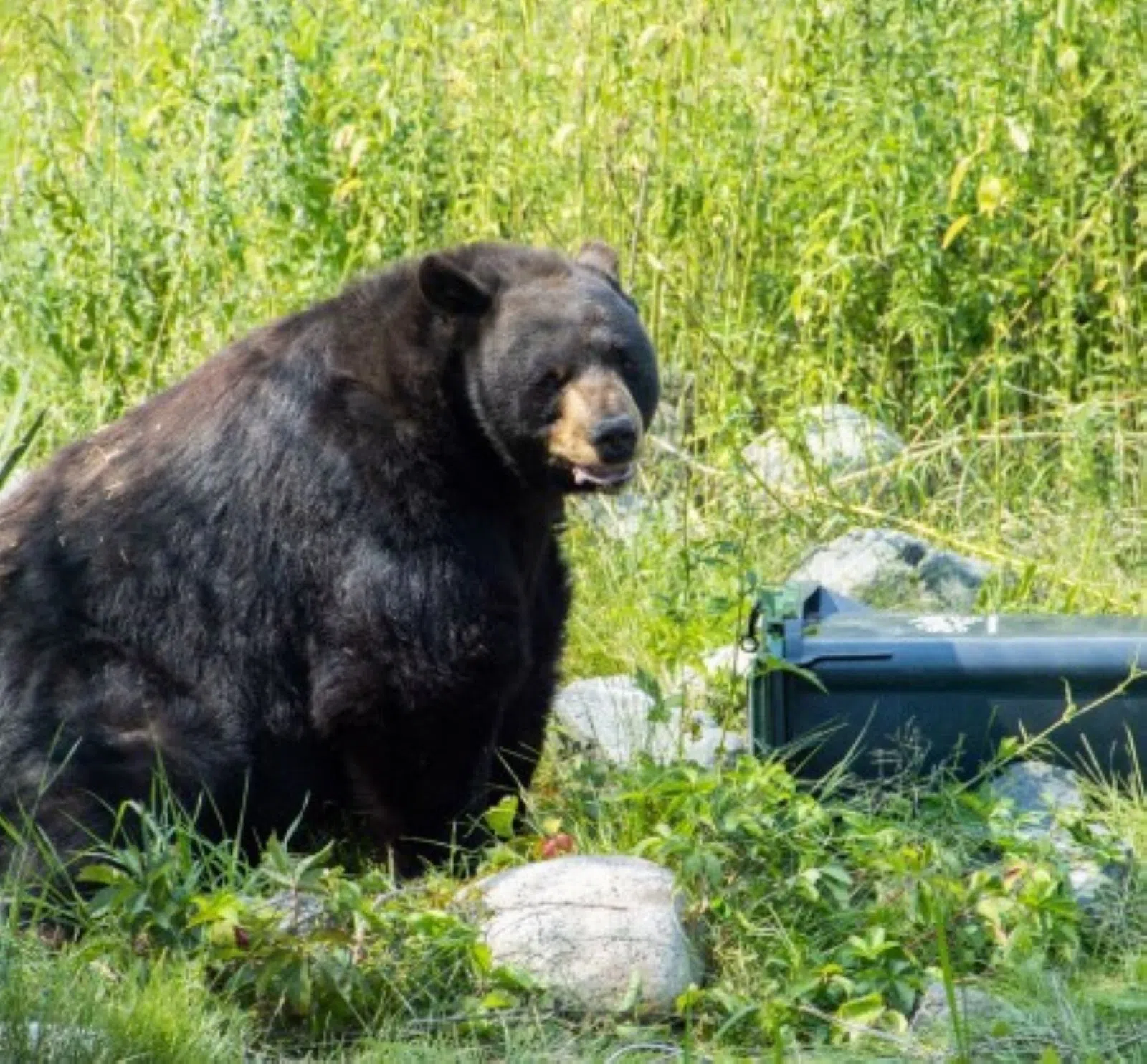
Black bear unable to access a bear-resistant City of Kamloops garbage cart/via City of Kamloops
As bears begin emerging from hibernation, the city of Kamloops is reminding residents that small actions can make a big difference in keeping both humans and wildlife safe.
April marks the official start of Bear Smart season, a time when hungry bears start searching for food and are more likely to wander into neighbourhoods.
“Unmanaged wildlife attractants can draw those hungry bears into our neighbourhoods and potentially cause conflict,” said Danielle Sparks, Environmental Services Supervisor with the City.
Sparks explained in a recent interview that this seasonal shift is why the City pushes awareness efforts each spring.
“This is the time of year where we start to see hungry bears emerging from hibernation,” she said. “We want to remind residents that unmanaged attractants can bring them into communities.”
A common issue with serious consequences
While bear sightings are relatively common in Kamloops, Sparks said conflicts often depend on environmental conditions.
“If natural food sources are limited, that’s when bears usually come into our communities to look for other food,” she said.
The consequences can be severe. Once a bear becomes “food-conditioned” — meaning it repeatedly finds food in residential areas — it cannot be rehabilitated or relocated.
“At that point, unfortunately, that bear needs to be removed from the population,” Sparks said.
City officials track success through resident reports and data collected by the BC Conservation Officer Service, including how many bears are destroyed due to conflicts.
Garbage remains the top attractant
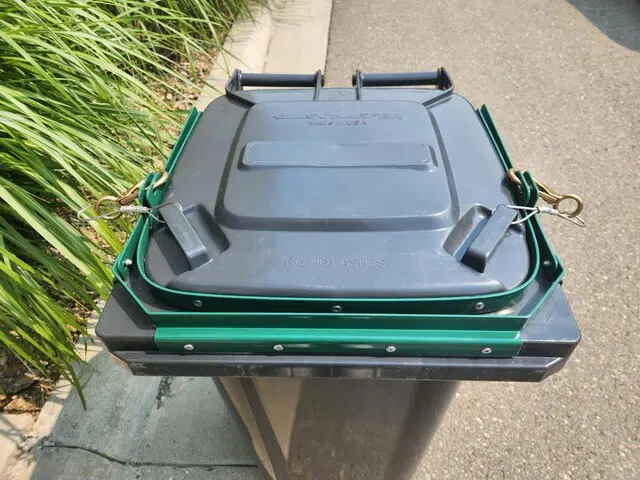
Supplied: City of Kamloops
The City says improperly managed garbage is the number one cause of human-bear conflict.
Residents are urged to:
- Store garbage securely in a garage or shed when possible
- Use airtight containers or freeze strong-smelling food waste until collection day
- Keep pet food indoors
- Clean barbecues regularly
- Remove bird feeders between May and November
- Pick ripe fruit and clean up fallen produce
- Avoid composting meat, dairy, or grease
Under local bylaws, waste must be stored in a way that is inaccessible to wildlife. Violations can result in a $100 fine.
For those unable to store bins indoors, bear-resistant carts are available through the City for an additional annual fee.
New “Bear Smart Champion” program
This year, the City has also introduced a new initiative to encourage community participation.
The Bear Smart Champion program invites residents to pledge their commitment to reducing human-bear conflict. Participants receive a sticker and are entered into a draw to win a bear-resistant Yeti cooler.
“It’s about recognizing residents who are doing the right things around their homes,” Sparks said.
The program runs from April 1 to November 30, aligning with peak bear activity.
A shared responsibility
Sparks emphasized that preventing conflicts ultimately comes down to individual actions.
“All residents’ actions can save a bear’s life,” she said.
More information on bear safety, reporting wildlife encounters, and the new pledge program is available through the City’s Bear Smart resources.