




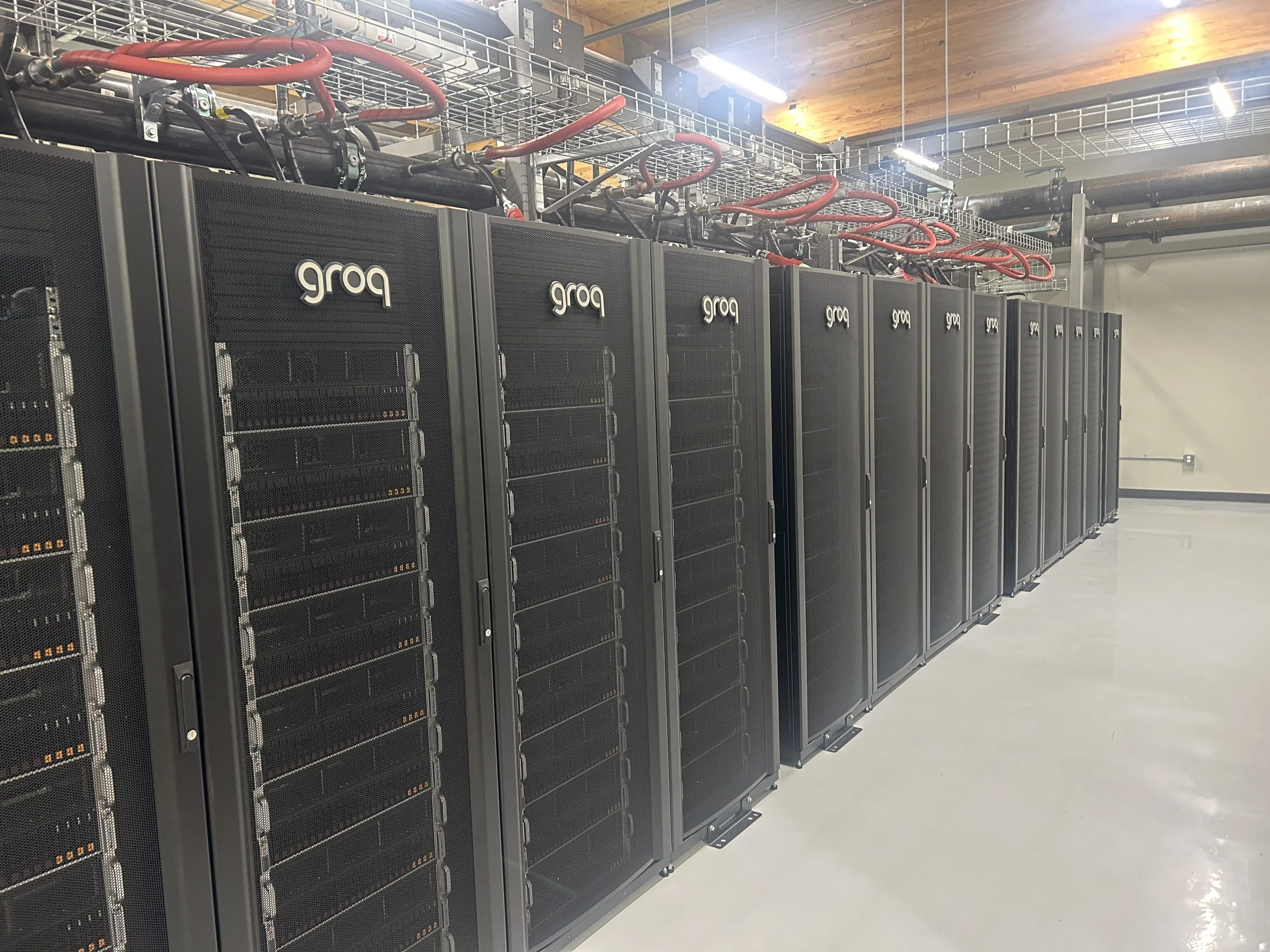
Kamloops city council is asking the Federation of Canadian Municipalities to push Ottawa for a national policy framework governing data centres and artificial intelligence infrastructure.
Council unanimously approved a motion Tuesday brought forward by councillors Nancy Bepple and Dale Bass, requesting that FCM advocate to the federal government for coordinated rules around data centres, including infrastructure capacity requirements and jurisdictional responsibilities.
The motion also asks FCM to consult municipalities across Canada on emerging challenges, best practices and policy recommendations related to AI infrastructure development.
Filling a Policy Gap
Bass said the request comes as municipalities increasingly grapple with questions surrounding AI facilities and data centres, while federal guidance remains limited.
“This is asking for the federal government, which did not include anything in the most recent statement on AI, about all of the challenges that are going to be faced by municipalities across the country dealing with this,” Bass told council.
The motion follows council’s recent approval of a separate initiative directing staff to develop a local framework for evaluating proposed data centre developments in Kamloops.
Bass argued the two efforts complement one another and could position Kamloops as a leader in shaping future regulations.
“We could be leaders here through this,” she said. “We could find ourselves in a situation where FCM, if this is approved, looks around, talks to municipalities and discovers, ‘Hey, Kamloops has got this great idea.'”
Concerns Extend Beyond Kamloops
During debate, Bepple said communities across Canada are facing similar concerns as governments and industry move to expand AI infrastructure.
Speaking about discussions she attended at the recent FCM conference, Bepple said local governments are increasingly focused on the potential impacts of large-scale data centres.
Among the concerns raised are electricity consumption, water use and environmental impacts.
Bepple pointed to a proposed data centre near Regina that is expected to use as much electricity as approximately 200,000 households.
“The types of issues that we’re considering in Kamloops are mirrored across the country,” she said. “For each individual municipality to take on the task of defining regulations and oversight is onerous.”
Kamloops Positioned for Future Development
The discussion comes as Kamloops has emerged as a potential destination for future data centre development.
Several councillors noted the city’s fibre-optic infrastructure and seismic stability have made it attractive for the industry, while the provincial government has identified Kamloops as a potential location for future facilities.
Councillor Mike O’Reilly said it makes sense for the city to be involved in shaping future regulations.
“I don’t think it hurts to have the federal government doing something on our behalf,” O’Reilly said.
Debate Over Local Versus National Action
Not all councillors agreed on the approach.
Councillor Kelly Hall questioned why council was pursuing a federal advocacy effort after recently debating a local policy framework.
Councillor Katie Neustaeter said the two initiatives could work together, but expressed disappointment that support for a national framework had not been matched by support for the local policy motion approved earlier by council.
Neustaeter argued Kamloops has an opportunity to become a leader in developing best practices for data centre development.
Meanwhile, Bepple maintained that some of the issues raised in the earlier motion fell under federal jurisdiction and would be better addressed through national standards.
Water, Power and Environmental Questions
Councillor Bill Sarai said the rapid growth of AI technology has generated both enthusiasm and concern, making it important to rely on experts and regulators when evaluating future projects.
Sarai pointed to a data centre project in Merritt that uses a closed-loop cooling system and recaptures heat for community use.
“If an AI centre comes in here and needs water from a river on a consistent basis, I will definitely — I think all of us here will share my sentiments — that’s just a no-go for us,” Sarai said.
He added that BC Hydro and provincial authorities will play an important role in determining whether future projects have the infrastructure capacity needed to proceed.
Next Steps
The resolution will now be forwarded to FCM for consideration.
If adopted by the national organization, it could become part of its advocacy efforts with the federal government as Ottawa develops policies related to artificial intelligence and data centre infrastructure.
Council approved the motion unanimously.