



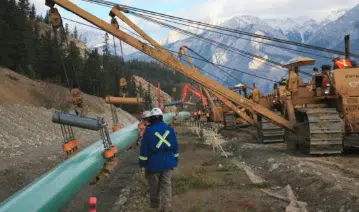
Prime Minister Justin Trudeau says his government has once again approved the Trans Mountain pipeline, with plans to have shovels in the ground this construction season.
The approval includes adopting 156 binding conditions and all 16 marine recommendations made by the National Energy Board.
“The Liberal government’s decision to forge ahead with the Trans Mountain Expansion project is an abdication of their responsibility to Canadians to show climate leadership,” said BC Green Party Leader, Andrew Weaver.
“Just yesterday these very same Ministers supported a motion that declared a climate emergency. How can this government declare a climate emergency and yet continue to invest in major expansions of fossil fuel infrastructure that will last 40-50 years?”
BC Liberal Leader Andrew Wilkinson however said the decision sends a clear message to the BC NDP.
“The time for obstruction is over – their government needs to get out of the way and support this project,” Wilkinson said. “The majority of British Columbians support this project, including more than 40 First Nations who signed benefits agreements to support the pipeline expansion. It’s a great day for B.C. and a great day for Canada.”
Senior government officials say former Supreme Court Justice Frank Iacobucci has signed off on extensive efforts to consult with First Nations per court mandate. The government will launch the engagement process, which includes opening opportunities for First Nations along the route for “meaningful economic participation” in the pipeline.
The federal government will also send letters to all 129 First Nations communities along the pipeline route, with plans to use pipeline revenues to transition to clean energy projects. Officials estimate tax revenues to be around $500 million year.
“No matter who forms the next government in Ottawa, the Trans Mountain Pipeline will never be built,” noted Sven Biggs, Climate and Energy Campaigner at Stand.earth. “People care deeply about protecting the BC coast, and British Columbians remain opposed to this pipeline and the risks of a devastating oil spill that come with it. Whenever construction resumes, another wave of protests is guaranteed in British Columbia.”
The pipeline route is over 100 km long and in seven different sections, so construction could begin in any one of them.
Senior federal government officials also say “good progress” has been made on addressing concerns from Coldwater First Nation. Discussions are ongoing but there might be solution on addressing the band’s aquifer concerns.