



Officials in the Cariboo Regional District are hoping to hear from residents in the Big Creek and Nemiah Valley, as well as the Xeni Gwet’in First Nation affected by flooding on the Chilcotin River.
Spokesperson Emily Epp says 20 affected residents have reached out so far to officials, but she notes that there are likely more people who have been impacted.
“We are going to be doing a flight today with some of our partners including the Ministry of Agriculture, Chilcotin National Government and the Ministry of Forests to get out in the area and chat with residents and see the situation first hand,” she said.
“We’ll probably have a better sense this afternoon, but we are hopeful that the waters will be going down today.”
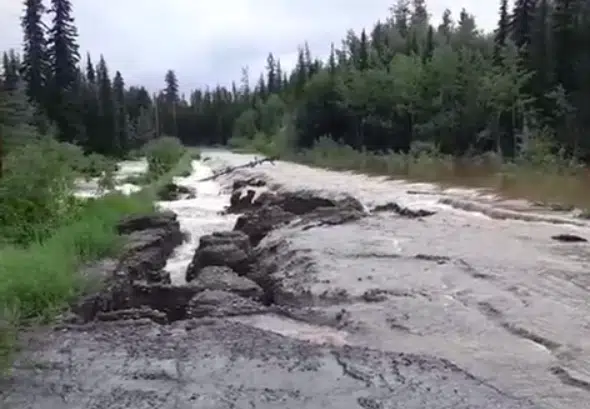
She says the Taseko Lake Road and the Farwell Canyon Road are among those impacted by the flooding, noting that once the road access issues are resolved, officials will be able to better assess the impacts of the flooding.
“We are hearing mainly about damages to the hayfields and outbuildings, that type of thing,” Epp said.
Flood warnings on two tributaries of the Chilcotin River – the Chilko River near Redstone and the Big Creek above Groundhog Creek – have been downgraded to high streamflow advisories. The warning remains posted along the length of the Chilcotin and its other tributaries.
The province says several roads are closed after a one-in-200-year flood event, following more than 90 mm of rainfall in the past few days.
* Witte Road, 65 kilometres south of Alexis Creek (repair work underway)
* Farwell Canyon Road at the 54-kilometre mark
* Taseko Lake Road at Stone Reserve
* Sky Ranch Road at Farwell Canyon Road
* Newton Whitewater at Siwash Bridge
* Word Creek Road at Gaspard Bridge
Ministry of Transportation and Infrastructure staff and Dawson Road Maintenance are monitoring water levels. Once the water recedes, any work needed to reopen these roads will be done, including mobilizing the necessary road equipment in preparation for the cleanup.
“While the affected roads have low traffic volumes, they provide important access for isolated residents and camps,” noted Ministry staff, in a release.
(Photo: Kai Nagata)