




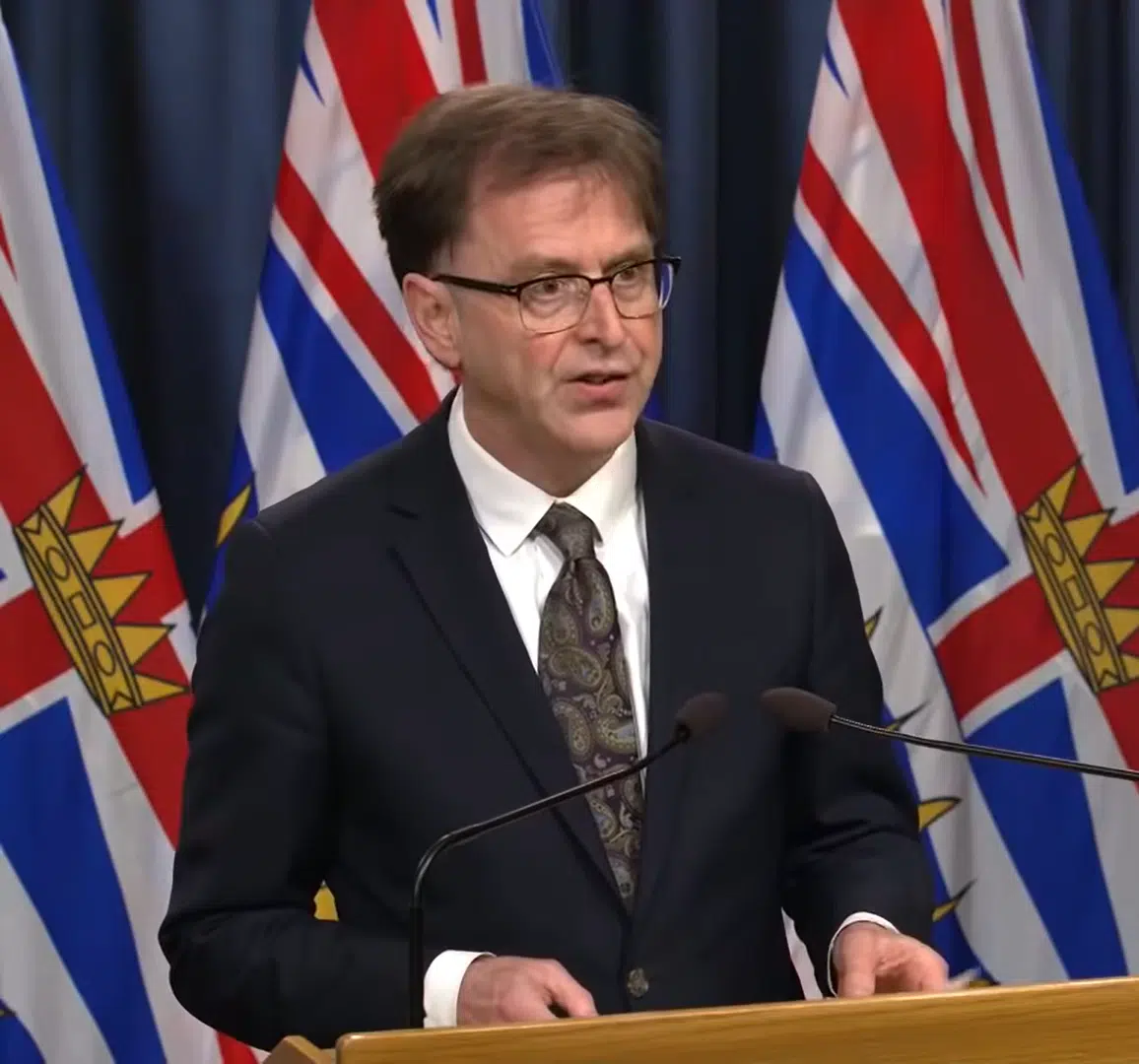
B.C.’s health minister says the province’s approach to flattening the COVID-19 curve has been ‘uniquely ours’.
Adrian Dix made those comments on Wednesday, while saying its hard to watch some countries and communities around the world go back into lock down because of a spike in COVID-19 cases.
“It’s difficult because we live in one world. It’s difficult because this is a world pandemic and these are places close to us and close to our hearts,” he said. “Along the way in our B.C. pandemic in our fight to stop the spread, we learned that indecision is the acquaintance of COVID-19.”
“Inconsistency is its friend and bad decisions are its closely ally. COVID-19 finds those gaps and pounces and it can cost lives.”
Dix says he also understands that people are inconvenienced by the closure of the border between Canada and the United States, but he adds its important to ensure people in the province are kept safe.
“We’re seeing increases in cases whether its Alberta or Washington and Oregon and California, in Nevada, in Arizona, and in other American states. Record increases. We obviously are very supportive of the efforts of public health in those jurisdictions,” Dix added.
“We clearly need to maintain the current situation at the borders that it be closed to visitors.”
The border closure is a sentiment shared by Provincial Health Officer, Dr. Bonnie Henry, though she’s asking people who see American licence plates on vehicles north of the border to not be quick to judge.
Henry says says some Canadians living in the U.S. may be returning home to care for family members, noting its also not surprising they’re coming back given the sharp rise in COVID-19 cases in the States.
She did stress though that anyone arriving from south of the border must self-isolate for 14 days before they’re able to move around.
“I don’t think the dollars that would be invested in the tourist economy are worth the risk to public health,” Premier John Horgan said last week, when asked about the border. “And the vast majority of British Columbians agree with me on that.”
While the borders are closed to non-essential travel, both domestic and international flights continue in and out of the B.C. with several cases of COVID-19 confirmed on flights arriving or departing from Vancouver International Airport over the past month.
Henry noted that travelers arriving with symptoms of the virus cause her ‘great consternation’ noting its important for airlines to collect the appropriate contact information so that public health teams can identify people quickly if someone develops symptoms after a flight.
“One of the most challenging things we do is trying to get flight manifests a couple of days later when we recognize somebody who might be ill and the type of information that’s on those flight manifests is not very helpful in trying to followup people, which is also one of the reasons why we post things publicly,” Henry said.
Dix previously noted that the government indicates is not considering back-tracking to phase two of its reopening plan, given an outbreak of COVID-19 in downtown Kelowna, where at least 17 cases have been identified as of Tuesday afternoon.