




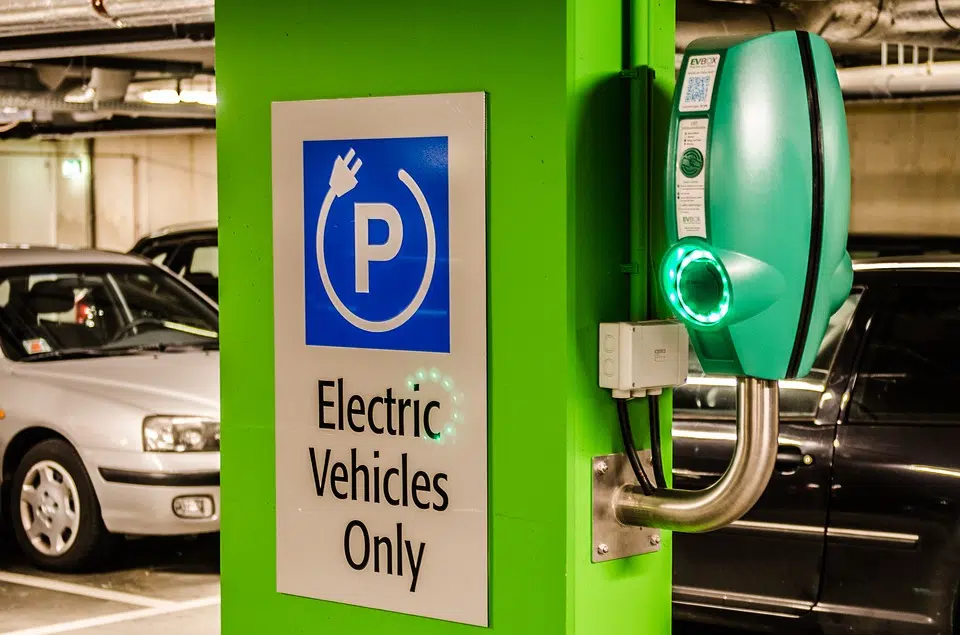
Kamloops council has adopted a new strategy on E-bikes and electric vehicles, but no money will be spent on it right away.
Council has approved the plan but for now, will only pursue goals that won’t cost money.
That will include amending zoning bylaws to make sure new developments have capacity for electric vehicle chargers, creating “E-V friendly” parking regulations and educating people on benefits of electric vehicles, among other things.
Councillor Sadie Hunter had pitched that motion because of financial constraints caused by the COVID-19 pandemic.
The conversation came up immediately after council voted to try and keep next year’s tax increase to zero per cent.
“In terms of struggling with balancing the conversation that we just had earlier, our fiscal responsibility, and moving us forward in a good way in terms of climate goals and creating a community that has access to progressive infrastructure… So for me, in my mind right now, what makes sense is to look at something that doesn’t have a cost associated with it.”
Councillor Bill Sarai questioned why the city would pay at all for electric vehicle chargers. According to the E-V strategy, the city plans to spend up to $600,000 in the next three years to install electric chargers.
“On the charging side, I’ve talked to builders, it costs $50 dollars to rough in a charging station into a new house. Fifty dollars. So why don’t we incentivize them to rough it in. Whoever want to live in that house, if he decides to have an E-bike or an E-car, he can finish that rough-in, just like they do their suites. And it’s not on us.”
Finance director Kathy Humphrey assures that no money will be spent on the strategy without additional council approval.
“I can’t think of anything specifically that would just get added in without it coming back through sort of discussion along the way.”
The electric vehicle strategy is aimed to cut down emissions, part of its “eight big moves” to reduce greenhouse gasses by 82 per cent in the next 30 years.
City staff say 66 per cent of local greenhouse gas emissions come from transportation.