




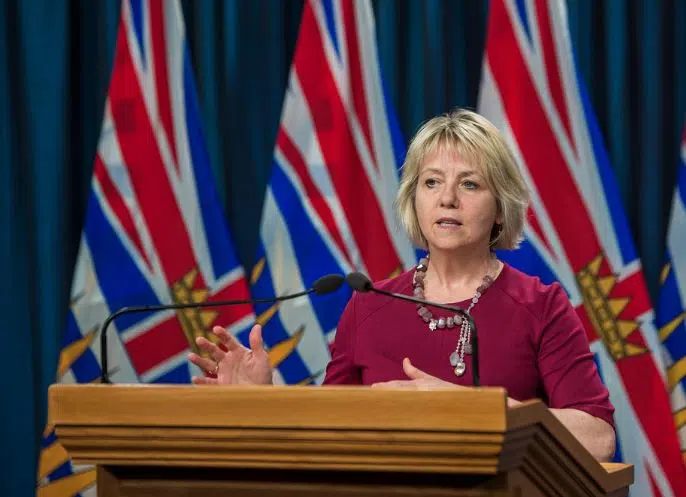
Dr. Bonnie Henry during a COVID-19 update briefing. (Photo via BC Government)
B.C. health officials are reporting 89 new COVID-19 cases, including one epi-linked case today, for a total of 6,041 cases.
Five of today’s cases were in the Interior Health Authority, which is now at 450 cases of the virus. There are currently 21 active cases across IHA with no one in hospital.
Active cases increased to 1,175, with 34 people in hospital, of which 11 are in ICU. There was one new death as well in long term care bringing B.C. death toll to 210 people.
There are also 2,801 people in isolation because of known exposure to a COVID-19 case.
New modelling data shows new cases of COVID-19 will rise over 150 a day if contacts remain at about 70 per cent of normal. Right now, Provincial Health Officer Dr. Bonnie Henry says we’re somewhere between 65 and 70 per cent of normal for rate of transmission.
“The largest proportion of case are in young people between the ages of 20 to 29, and that’s reflecting what we have been seeing over the past few weeks this summer,” she said. “Many of these interactions are social interactions where it has been spread among social networks.”
Henry though adds there has been some cases in older people in recent weeks as well.
“It means that all of our communities can be at risk and how important it is for us to continue to take the measures to protect particularly those people who have vulnerabilities that make then susceptible to more serious illness,” she added.
Henry says the median age of cases is now 41, and the focus of outbreak is the Lower Mainland, where most of the recent cases have been. The rate of transmission among people 19 years old and young is low says Dr. Henry, calling it a good sign with school set to resume next week.
Overall community transmission also remains low, with Dr. Henry saying right now, there are 11.4 cases per 100,000 people in B.C., noting it will be problematic if we reach 25 cases per 100,000 people. Henry believes it’s still possible to reflatten the curve of infection if everyone recommits to preventing transmission.
“We’re at that precipice but we have it within our hands to bend that curve back down,” she said, noting bringing the rate of contacts back to about 50 per cent of normal could bend the curve back down. “We are trying to maintain a fine balance, but we are on an edge.”
Henry says the key is to avoid high-risk activities like limiting the time you spend with people you don’t know without things like physical distancing or wearing a mask.
The source of infections appear to differ based on the age of the person. Children under the age of 10 are most likely to be infected at home, seniors over the age of 80 are most likely to be exposed in health-care settings. A majority of the people between the age of 20 and 50 are being infected at private parties, in restaurants or at work.
B.C.’s testing capacity – currently between 4,000 and 5,000 people a day – is also a factor, noted Dr. Henry.
“Even though we have higher numbers of cases, we are finding and testing more people than we were in March who have this illness, so we don’t believe the number of people out there with COVID-19 who aren’t detected is as high as it was when testing was limited,” she said.
There are now 4,644 people – about 77 per cent – who are considered to have recovered from COVID-19.
Modelling data shows new cases of #COVID19 will rise over 150 a day if contacts remain at about 70 per cent of normal. pic.twitter.com/SF9Ir5pjOc
— Victor Mario Kaisar (@supermario_47) September 3, 2020
Dr. Henry says most of the #COVID19 exposure has been happening in households as seen below. #Kamloops #bcpoli pic.twitter.com/B42O2HZfjz
— Victor Mario Kaisar (@supermario_47) September 3, 2020