



After years of the Coldwater Indian Band raising concerns about its aquifer, Trans Mountain now plans to reroute its pipeline expansion through the reserve near Merritt.
The Crown corporation has applied to the Canada Energy Regulator to reroute 18 kilometres of its pipeline west of the Coldwater River, called the “West Alternative Route.”
The approved right-of-way for the expansion project is through the Coldwater band is on the east side of the river, near the Coquihalla Highway.
But Coldwater Indian Band chief Lee Spahan has maintained that route would be too risky, running too close to his band’s aquifer, which is its main source of drinking water.
“Water is life and water is sacred. We all depend on water, and we need to start having these discussions about water. Climate change is happening and we need to make a change immediately.”
CEO Ian Anderson told NL News last year about negotiations with the band.
“I think they’re firmly-stated position is, and I respect it entirely, the protection of their water. And how important the aquifer is and water is to the community. And that’s my charge as well. I’m hopeful that if we can find a route that serves both of our needs, that that will bring us closer together. And we can carry on the relationship from there.”
The application to the CER is 609 pages long. It includes correspondence from local chiefs in the area, as Trans Mountain reached out to 20 different Indigenous communities before filing the application.
In a letter included in the application, written last week, Spahan says the rerouting west of the river will “address Coldwater’s concerns regarding potential impacts from the (Trans Mountain expansion project) on the aquifer.” Spahan says his council supports the proposed rerouting, as long as residents don’t say otherwise.
The rerouting would add nearly three kilometres of pipe to the project. A cost for the extra material and route planning has not been disclosed.
Trans Mountain hopes to start construction through the reserve in August of 2021. It is asking the CER to give approval in principal by April, and wants the federal government to approve the alternate route by July. Work on the West Alternative Route would take about 11 months.
The pipeline proposes to cross underneath the river in two locations; Trans Mountain says neither crossing will disturb the river itself, water quality or fish habitat.
The pipeline expansion spans more than 930 km, and will triple capacity to ship crude oil from the Alberta oilsands to Burnaby. It’s currently expected to cost $12.6 billion and will be done by the end of 2022.
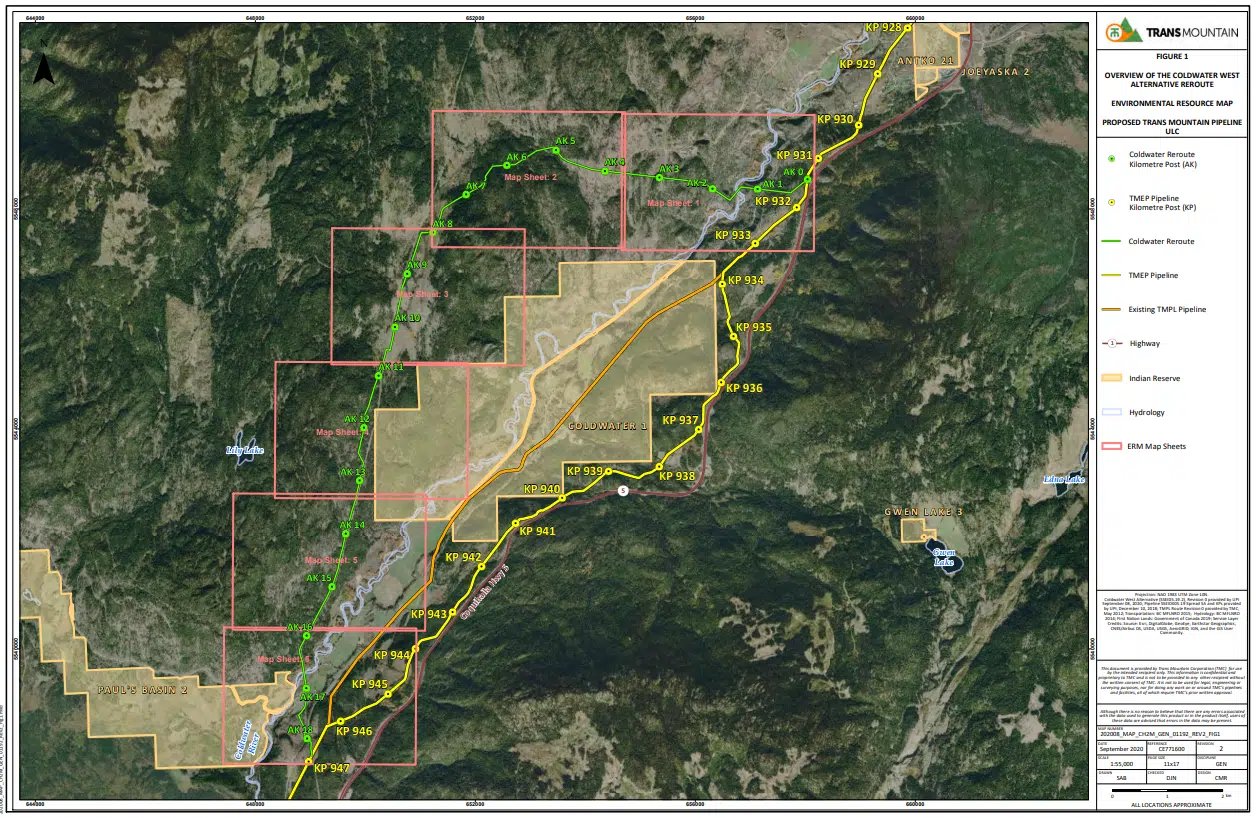
Trans Mountain’s existing pipeline, approved right-of-way and its newly-proposed pipeline route through the Coldwater Indian Band.