



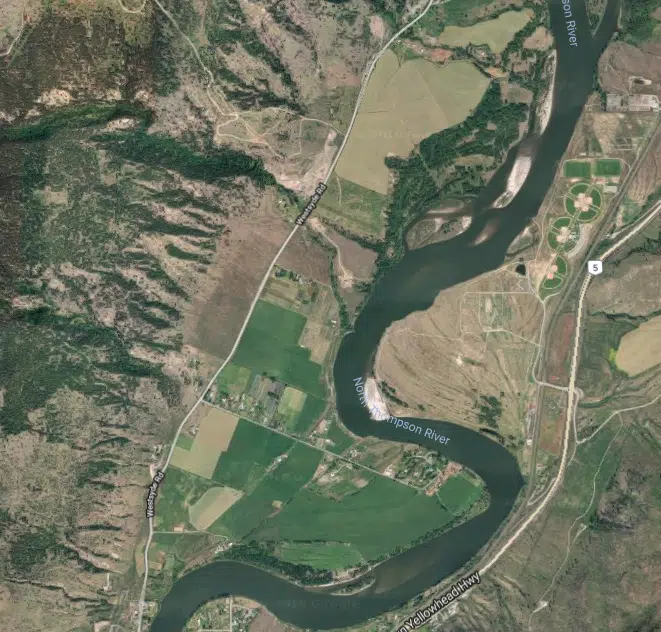
Aerial map showing land irrigated by the Noble Creek Irrigation System
One of the largest properties using the Noble Creek Irrigation System is concerned about a huge increase in taxes on the horizon for several dozen properties.
The City of Kamloops says it will cost just under $14 million over 20 years to upgrade the irrigation system, and 47 property owners are on the hook for 80 per cent of the cost.
Manager of Privato Winery and Woodward Cider, Adam Woodward, says the funding model is not what property owners want.
“Definitely not. The simple fact will be many farmers will be out of business because of this. Because they can’t afford to pay it, and the city hasn’t taken that into consideration at all.”
The improvements would cost $5,282 for the smallest property affected, and the largest would pay $1.95 million. They would have the option of paying in one lump sum or paying over 30 years.
The other 20 per cent of the cost would be shouldered by the City of Kamloops through reserve funds; the city benefits from the irrigation system by using some of it as potable water.
Several property owners will be speaking as a delegation at Kamloops council on Tuesday afternoon to talk about the planned spending.
“One of the main things that hasn’t happened in the last 15 months or so is consultation with us. We just received the letter two weeks ago and hadn’t heard back from them since July 31st of 2019. So we just want to be brought to the table and have a chat before they go and spend our money.”
Woodward says the city should consider grant funding instead.
“There’s lots out there right now, including $1.5 billion dollars that recently came out to support irrigation projects by the federal government. That’s up for grabs, I think it starts in April. So that’s a win-win for everybody if we can go that route.”
The city inherited the irrigation system during amalgamation with Rayleigh and Karindale in 1973. Staff say the system is nearing the end of its life and operates at a deficit each year; in 2019 alone the deficit to operate the system was more than $130,000.