



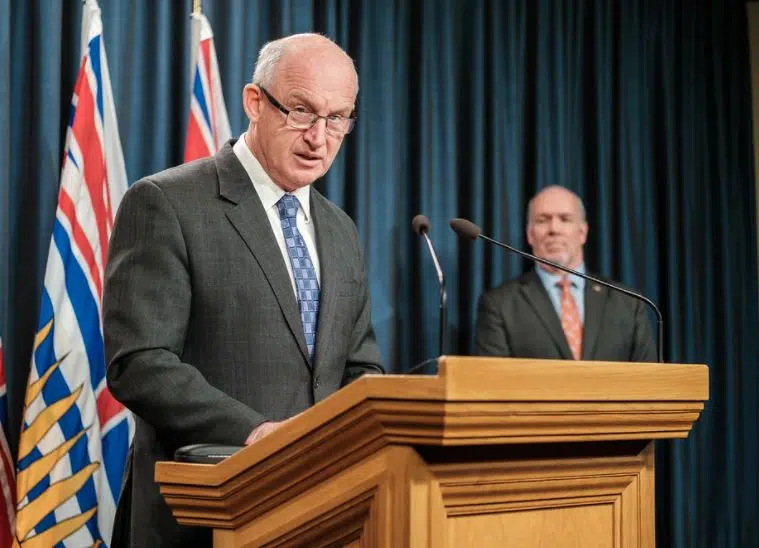
B.C.’s Public Safety Minister has announced a formal travel ban between health authorities in the province until May 25.
Mike Farnworth says Interior Health and Northern Health will be considered one zone, as will Fraser Health and Vancouver Coastal Health. Vancouver Island will be its own zone, though there are exemptions for the Central Coast, the Bella Coola Valley, and Hope.
He says while the order does not stop people from travelling large distances within their regions, this should not be happening regardless.
“For example, going from Kamloops to Whistler, or from Vancouver to Tofino. It will not apply to travel within the defined regions,” Farnworth said.
“While this order doesn’t stop someone from travelling large distances within their own region, from Merritt to Nelson, or Abbotsford to Squamish for example, that doesn’t mean that these trips should be happening. Do the right thing, and stay within the areas that you live.”
Farnworth says the new orders are being brought in using the extraordinary powers under the Emergency Program Act.
“Over the coming days, we will continue working with police to establish additional measures to ensure they have the necessary authority to conduct periodic roadside checks, like the CounterAttack program at strategic points into and out of the defined regions,” Farnworth said.
“Our top priority is to keep British Columbians, particularly our most vulnerable people, healthy and safe.”
Earlier this week, the National Police Federation said it had “grave concerns” about police taking part in enforcing a COVID-19 ban on non-essential travel.
The province says police will not engage in random checks. It notes any enforcement measures will be done after consulting with stakeholders to limit the impacts to racialized communities.
In a release, the BC Civil Liberties Association says it is reviewing the travel restrictions, but notes it is not impressed.
It says enforcement details aren’t clear especially around the discretion of police issuing fines to people not complying with the new travel measures.
“At a time of increased public scrutiny about systemic racism in policing, it is alarming that we now have three public announcements in the span of one week about increased police enforcement powers, but we still do not have details about the scope of these policing powers,” Executive Director Harsha Walia said.
“We continue to have several concerns regarding the serious constitutional and privacy issues at stake, as well as the potential harmful impacts of this order on Indigenous, Black and racialized communities.”
The BCCLA also says there are concerns when it comes to constitutional and privacy issues, noting people still have no answers about what precisely to expect and what their rights are if stopped by a police officer.
“What is the permissible scope of questioning that police will be authorized to conduct? Does a person have to answer questions about where they are going? Do they have to show evidence about their travels?” said BCCLA Interim Policy Director, Meghan McDermott.
“How will the provincial government ensure that police will not use these expanded police powers as a pretext for other law enforcement actions? Will police be retaining or storing any information they collect in police databases?”
Farnworth says people could be facing a $575 fine if they are found to be travelling outside of their health authority for a non-essential reasons.
“While this new legal order targets those who are travelling across regional zones for recreational purposes, the advice from Dr. Henry to stay local remains in place everywhere in B.C. Do not go to Whistler or Tofino even on a day trip,” Farnworth added. “Everyone should stay close to home.”
Exemptions will include people who are going to school or work, commercial vehicles, people returning to their principal address, or if they need to travel to get health care or help someone who needs medical attention.
Farnworth also says his ministry will be working with the Ministry of Transportation and Infrastructure to bring in highway signs along the border with Alberta to deter out-of-province travellers.