




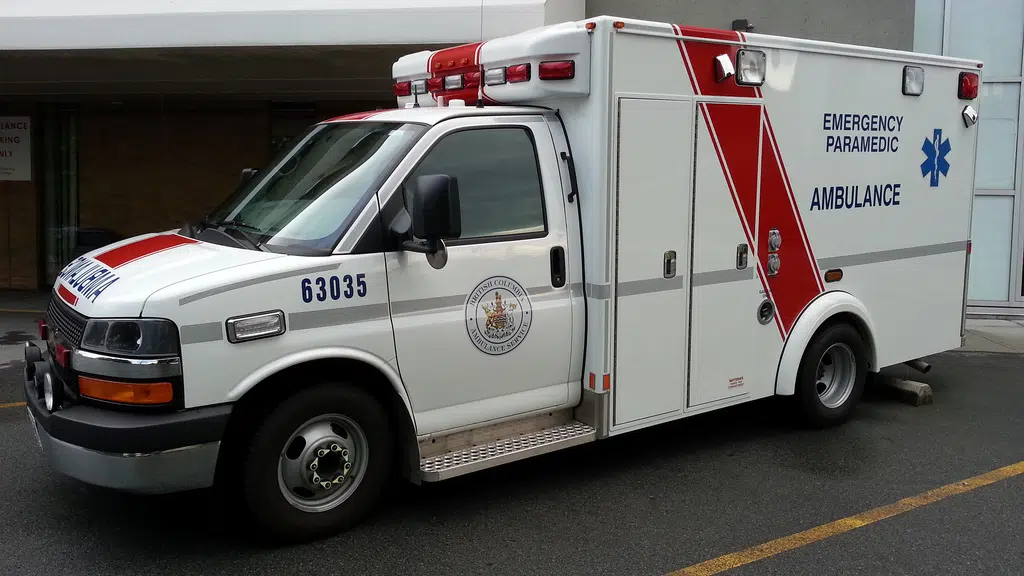
BC Emergency Health Services says it will be adding between 29 and 32 new paramedics in the Thompson-Nicola Regional District later this year.
A new unionized contract for paramedics will come into effect in November, which will see 500 new paramedic jobs across B.C., including 230 part-time positions and 270 full time jobs.
The increase in ambulance service will mean seven new full-time paramedics in Merritt and four in Chase, as well as four new scheduled on call (SOC) positions in Clearwater and Clinton, three new positions each in Barriere, Ashcroft and Lytton, two new positions in Logan Lake and one in Blue River.
BCEHS patient care delivery executive director, Paul Vallely, says scheduled on call paramedics will start being paid a regular wage during their eight-hour shifts of about $32 per hour, instead of their standard pay of $2 dollars per hour when not called out during a shift.
Paramedics will work three days on, three days off. They will be paid for a minimum of four hours for any callouts during their 16 hours in between shifts while on call.
Vallely spoke to the TNRD board last week, and answered several concerns about potential burnout with the new contract for paramedics who have to travel great distances for responses.
“As part of the collective agreement with the union, we have what we refer to as the SOC memorandum of understanding, which has a number of measures in there to prevent and mitigate fatigue for paramedics working on these shifts,” Vallely says, who repeated that he spent the early part of his career as an on-call paramedic in Clinton and Ashcroft.
He says one measure is if paramedics are called out on their hours off, there will be an eight-to-10-hour buffer before starting their next scheduled shift. He says there is also now greater ambulance support based in Kamloops, by ground and by air.
“When you have smaller towns with very little 911 call volume and therefore maybe only a single ambulance, the second that ambulance goes out on a 911 call there’s always potential a second 911 call comes in. So we do have the ability to pull resources for 911 calls, which is our priority obviously.”
Vallely says he also hopes better pay will also help attract paramedics to work in rural communities. He says working conditions for scheduled on call paramedics have made retention a challenge for decades.