




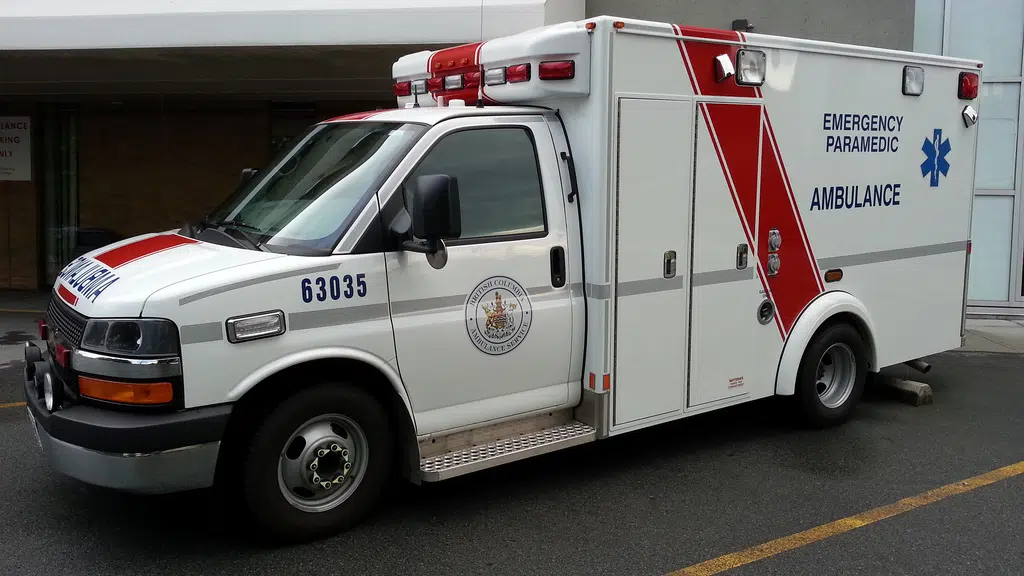
The Mayor of Ashcroft says people in her community are relieved to know they will have 24-hour ambulance service, starting next month.
Barbara Roden tells NL News it will mean a 90-second response time to calls as there will be someone in the ambulance station around the clock.
“The proposed restructuring that we heard about earlier this summer would have had eight hours of staffing and then 16 hours of on call and people were quite concerned about what that was going to mean,” she said.
“In a lot of rural areas where you’re already looking at 15 to 20 minutes or more to get an ambulance there, every minute counts.”
Roden says it will also be easier to find people to work in her community now that the government has overturned its previous decision leading to full-time paramedic jobs in Ashcroft. The fear, she said, was during those 16 on call hours, response times would increase dramatically anywhere from 90 seconds to get an ambulance on the road to as much as 10 to 20 minutes or longer.
“Certainly one of the drawbacks to recruiting was that on call model because when the ambulance paramedics are on call, they’re only making $2 an hour,” she added. “Going to that 24-7 model is vastly easier to not only attract people to the communities who may already be paramedics but to attract more people into the field.”
As it stands, Roden says Ashcroft is filling positions with a lot of temporary positions with people coming up from the Lower Mainland.
“This is going to create a lot of positions in the community itself, which is great for the communities on so many levels, because when you have people who are living here, they are raising their families here,” she added.
“That is a wonderful solution for everyone.”
Similarly, the Mayor of Clearwater tells NL News that around the clock ambulance service is a victory for small communities like his.
Merlin Blackwell says he is happy that the government listened to communities when they raised concerns about those previously proposed staffing changes.
“Obviously, there’s going to be a need to recruit some people for those positions and right now, trying to find a house of an apartment in Clearwater is virtually impossible,” he said, on the NL Morning News. “But as long as they allow the people who are in the EMR position to start training up to be full on paramedics, I think we can solve a lot of the problems.”
Blackwell says the increased ambulance service is much needed in his community north of Kamloops.
“We have a lot of things going on up there with industrial work and tourism and a very busy highway corridor,” he said. “We needed that. The government listened to reason and delivered. I’m so happy to have that one.”
Both Ashcroft and Clearwater along with Barriere, Lillooet, and Sicamous will benefit from this transition to 24-hour ambulance service. Each of those communities will have a complement of eight full-time positions when the change takes effect.
The Ministry of Health tells NL News that seven full time positions will be added to both Ashcroft and Barriere while Clearwater, Lillooet, and Sicamous will see eight new positions each. As it stands, these communities have the following paramedic positions in place, as listed below:
- Ashcroft – One (FT) Unit Chief; one (FT) Community Paramedic; plus approximately 20 on-call paramedics
- Barriere – One (FT) Unit Chief; one (PT) Community Paramedic; plus approximately 10 on-call paramedics
- Clearwater – Two (PT) Community Paramedics; plus approximately 10 on-call paramedics including an on-call Unit Chief
- Lillooet – One (PT) Community Paramedic; plus approximately 20 on-call paramedics including an on-call Unit Chief
- Sicamous – Two (PT) Community Paramedics; plus approximately 7 on-call paramedics including an on-call Unit Chief
The Ministry says the community paramedic positions listed above will remain in place.
B.C.’s interim chief ambulance officer, Leanne Heppell, says BCEHS is on track to fill the new paramedic and dispatch jobs that have been announced by the provincial government this year.
“We know that citizens expect that when they call 9-1-1 with an urgent need, paramedics will arrive quickly and we are working to ensure that happens,” she added, noting BCEHS has been working hard to improve services to patients and to stabilize paramedic staffing, especially in rural and remote communities.
These changes are expected to come into effect on October 29.