




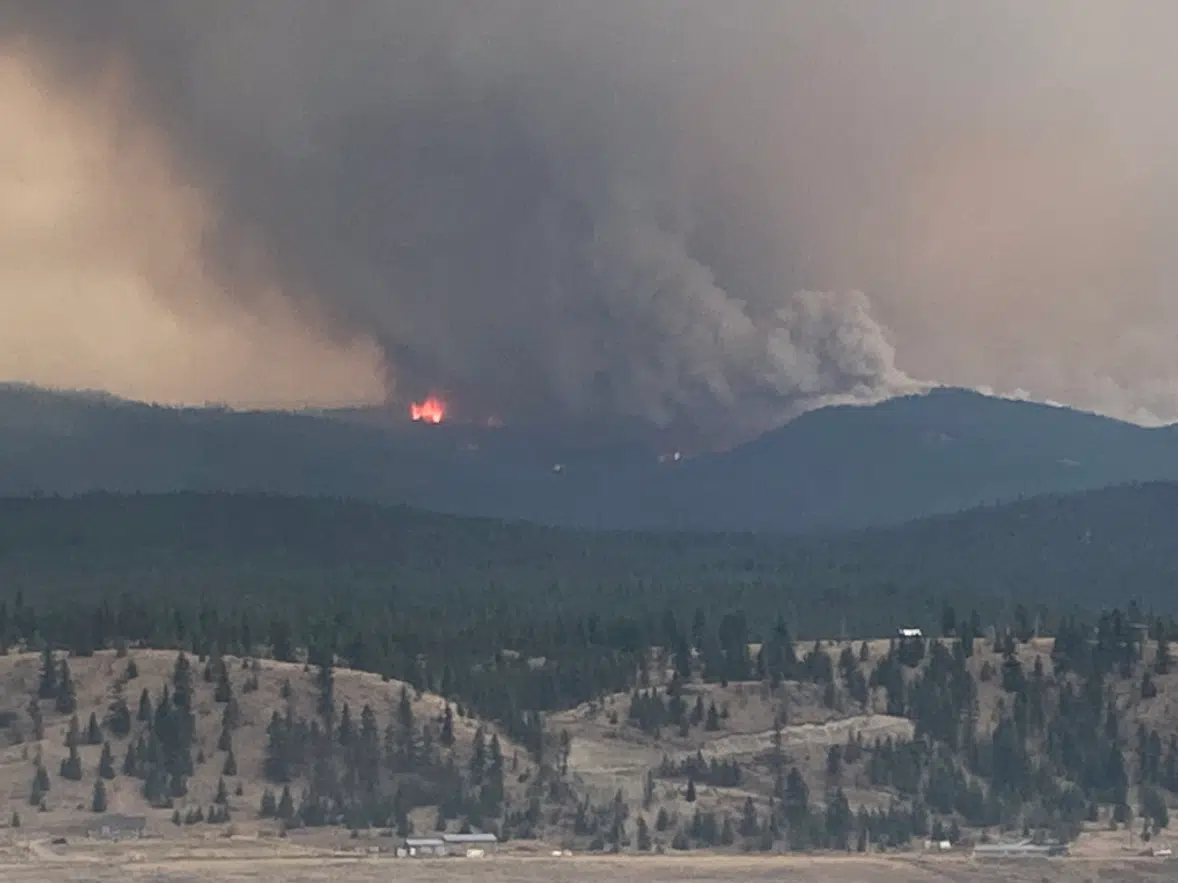
The Tremont Creek wildfire well above Cherry Creek on August 15, 2021. (Photo: Twitter: Kamscan)
A new report suggests last year’s extreme weather events in B.C. have topped the charts for the most expensive climate disaster in Canadian history.
From the unprecedented heat dome, horrific wildfires, widespread flooding, and landslides in 2021, the Canadian Centre for Policy Alternatives pegs the total economic costs in B.C. between $10.6 billion and $17.1 billion.
The think-tank’s Marc Lee says the study considers insured damages to property and cleanup costs to governments in their estimation, on top of losses to individual households and businesses.
“We looked at damages to assets and property, some of that is insured, a lot of it is not. We looked at government expenditures for emergency response for cleanup and rebuilding, we looked at income losses to workers and businesses — those are all the main categories — We tried to estimate a range on the low-end and high-end.”
In regards to insurable versus non-insurable damage to households from these natural disasters, Lee suggests it was crucial to include both in the estimate.
“In the case of wildfires, only about 30 per cent of the total damages are covered by insurance, much less in the case of floods, only about 12 per cent is the usual level of coverage. So we find when you look at all of the costs comprehensively,” explained Lee.
“We find that when you look at all of the cost comprehensively insured damages are only about five to eight per cent of the total, so about half of it is that is government expenditures.”
Lee says the costs to British Columbia’s economy from last year’s historic climate events range from three to five per cent of the province’s GDP.
“When you tally that all up, 3-5 per cent, its a little bit like inflation that is three to five per cent of our income that year that we did not get to spend on goods and services that made our lives better. It was just basically dealing with the aftermath of these disasters.”
Lee says their research also includes wage losses, suggesting workers lost anywhere from 1.5 to 2.6 billion due to business shutdowns.
Lee hopes the report will be a wake-up call for governments to take steps to prevent natural disasters from impacting the economy as hard in the future.
“I think the results are a wake-up call when you are talking about damages and costs that are that large then people are going to say; ‘what can we do to prevent that kind of thing from happening in the future?'”