




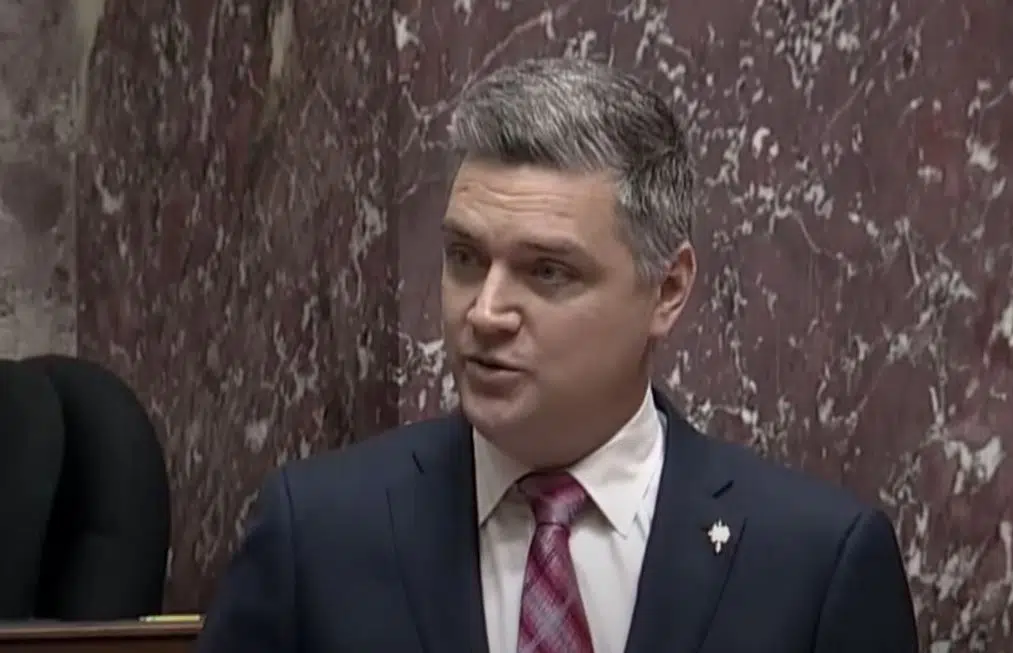
The MLA for Kamloops-South Thompson is calling on Premier David Eby to make good on the government’s vow to make Daylight Saving Time permanent.
On the eve of another time change, Todd Stone had a pun-laden line of questioning in the BC Legislature Thursday.
“We all know that there is nothing that the Premier loves more than making big flashy announcement but when it comes to results, he’s all talk and no clock,” Stone said. “Instead of springing forward to act on permanent daylight savings time, the Premier is falling back on tired excuses.”
“Despite all the talk and big promises from the premier, families are in for another rude and cruel awakening this Sunday. It’s deja vu all over again. Yes, it’s that least wonderful time of the year again when we all lose one hour of precious sleep because the premier couldn’t get the job done.”
The BC government under then premier John Horgan passed legislation to end the twice yearly time change in 2019, it delayed implementation until a similar change was made in the western United States, so B.C. could keep its economy aligned with its neighbours south of the border.
That vote came months after a survey showed 93 per cent of British Columbians were in favour of ending the seasonal time change.
“The people of British Columbia have spoken and their collective voice has come through loudly and clearly,” Horgan said in the fall of 2019. “When we spring forward next year in 2020, that will be the last time we do it.”
It wasn’t to be, and its largely where things remain today as British Columbians prepare to once again move their clocks ahead this Sunday.
“It’s time to wake up and smell the coffee. Is the Premier going to deliver real change or is he going to keep sleeping on the job?” Stone added.
NDP House Leader, Ravi Kahlon, says the provincial government remains committed to ending the time change, saying he knows it is an important issue for many families and businesses.
“We want to make sure that this gets done right. We want to make sure that it’s aligned with our jurisdictions on the West Coast. We want to make sure that our business community’s engaged and understands the implications of what this means,” Kahlon said. “We’re doing that work.”
Legislators in Washington state and Oregon have agreed to end time change, though they require federal approval before they can enact it.
“We certainly hope that California, which is in the process of moving in this direction, goes in that direction so that we can all move collectively,” Kahlon added.
The B.C. government also says it is closely watching the return of the Sunshine Protection Act in the United States, tabled by Florida Senator Marco Rubio.
“This ritual of changing time twice a year is stupid,” Rubio said in a press release last week. “Locking the clock has overwhelming bipartisan and popular support. This Congress, I hope that we can finally get this done.”
U.S. Representative Vern Buchanan, also a Republican from Florida, tabled similar legislation in the House of Representatives.
“There are enormous health and economic benefits to making daylight saving time permanent,” Buchanan said.
“Florida lawmakers have already voted to make daylight saving time permanent in my home state and Congress should pass the Sunshine Protection Act to move Florida and the rest of the country to year-round daylight saving time.”
Rubio first introduced the Sunshine Protection Act in 2021- to make daylight saving time permanent as of this November. While it was passed unanimously by the Senate in March 2022, the bill failed as the U.S. House of Representatives never brought the matter up for a vote prior to the dissolution of the 117th United States Congress.
If both pieces of legislature are passed and signed into law by U.S. President Joe Biden before the scheduled switch back to standard time on Nov. 5, this might be the last time people have to change their clocks.
Whether it will be though, remains to be seen.