




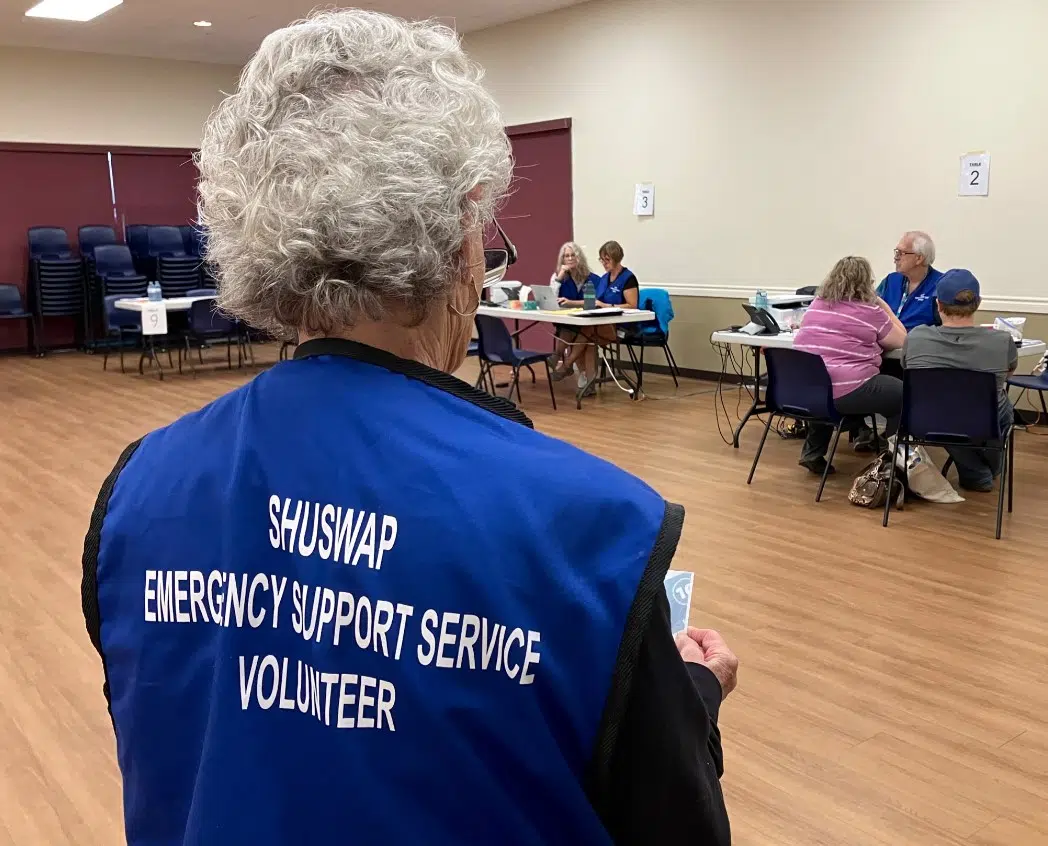
A volunteer at the CSRD reception centre. (Photo via Columbia Shuswap Regional District)
The B.C.. government is seeking public input on how it helps disaster evacuees in the wake of the province’s worst wildfire season on record.
The Ministry of Emergency Management wants to revamp its Emergency Support Services program, which provides short-term assistance for evacuees and communities including shelter, food, transportation, and clothing.
“It’ll be really good to get the public’s feedback to really understand what is happening and what their experiences are and what is working, what some of the opportunities are,” Thompson-Nicola Regional District CAO, Scott Hildebrand, who is on the Premier’s Task Force designed to guide the revamp, said.
“When we pull these recommendations together and make changes as a group, we’re really capturing everyone’s experience and everyone’s input.”
Hildebrand says the feedback will be used to provide a report to the province about how to ultimately revamp the Emergencies’ Act which has been underway since October.
“The Emergencies Act is still in the process of taking feedback from municipalities and First Nations and I think that is open and happening up until the end of January, which we as the TNRD are participating in as well,” Hildebrand said.
The ministry says about 24,300 households were put under evacuation orders in the summer of 2023 and more than 7,000 got support from Emergency Support Services.
Cathy Semchuk, emergency program coordinator for the Columbia Shuswap Regional District, said in a news release that the program helped thousands of Shuswap residents last summer.
She said the program “helped families meet their basic needs” during the fires that destroyed hundreds of homes in the Interior region.
The ministry wants the feedback to inform changes to the program in preparation for the 2024 fire season, as well as long term.
“I think everybody has a difference experience when they are impacted or not impacted with fires and emergencies and I really hope that people do provide open an honest information and details,” Hillebrand said. “I’m sure we are going to get complaints and issues but at the same time, I hope that there is some constructive feedback.”
Public feedback on changes to the ESS is being sought until Feb. 9 through the government’s public engagement website.